
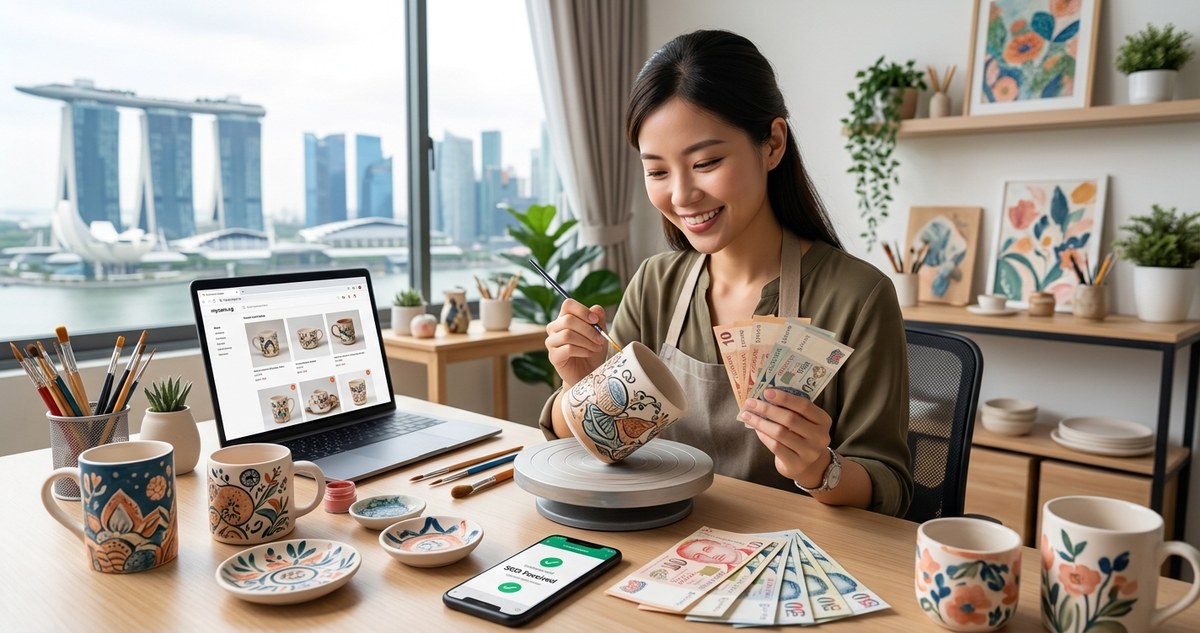
You have spent weekends perfecting your latte art. Or maybe you are the friend everyone turns to for handmade birthday cards. The thought of turning that passion into cash sounds tempting, but part of you wonders if it is just a pipe dream. Between your 9-to-5 and the endless to-do list, is it realistic to actually make money from hobby Singapore style? The short answer is yes, but only if you approach it with a clear head and a realistic plan. Let us look at what works, what does not, and how to test the waters without losing your savings.
Making money from a hobby in Singapore is possible, but not by magic. You need to pick the right hobby, test demand cheaply, price correctly, and manage the side income wisely. This guide gives you concrete steps, real examples, and common pitfalls to avoid so you can start small and grow smart.
What Does It Really Take to Turn a Hobby Into Income in Singapore?
Let us be honest. The Instagram version of a hobbyist who quit their job to bake macarons for a living is rare. Most Singaporeans who successfully monetize their hobbies keep their day jobs and treat the side income as a bonus. The key is to start small, keep your overheads low, and treat it like a business experiment, not a lifeline.
You do not need a fancy studio or a thousand dollars in equipment. You need a skill that people will pay for, a way to reach those people, and the discipline to handle the extra cash wisely. If you are already spending hours on something you love, you are halfway there.
The Real Money-Making Hobbies That Work in Singapore Right Now
Not every hobby can pay the bills. But several have proven track records in Singapore, especially with the rise of online marketplaces and social commerce. Here are some of the most viable options in 2026:
-
Photography and Videography
Weddings, proposal shoots, and corporate events are always in demand. If you own a decent camera and know how to edit, you can start by offering mini sessions for friends. Many beginners charge $150 to $300 for a 1-hour portrait shoot in locations like Gardens by the Bay or Fort Canning. -
Baking and Specialty Food
Selling homemade brownies, cakes, or kueh lapis is huge on Instagram and Carousell. The key is to find a niche (vegan, gluten-free, or nostalgic flavors) and use quality ingredients. A single batch of 24 cupcakes sold at $5 each can net you $120 minus cost of goods. -
Freelance Writing or Content Creation
If you love writing, you can ghostwrite blog posts, craft social media captions, or write product descriptions. Platforms like Upwork and Fiverr connect you with clients globally. Even a hobby blog can earn through affiliate marketing (though that takes time). -
Tutoring or Coaching
Teaching a skill you already know, like guitar, coding, or even chess, can bring in $50 to $100 per hour. Many Singaporeans use platforms like TutorChase or advertise on Telegram groups for their niche. -
Arts and Crafts
Handmade jewelry, resin art, and custom calligraphy sell well at weekend markets or on Shopify stores. Start by creating a few pieces, photograph them well, and list them on Carousell. If the response is good, scale up. -
Fitness Training
If you love working out, get a personal trainer certification (costs about $500 to $1,000) and offer outdoor bootcamps at a park near your HDB estate. Group rates of $20 per person per session can quickly add up. -
Plant Propagation and Home Gardening
Sell cuttings, potted plants, or handmade terrariums. The houseplant trend is still strong in Singapore. A single Monstera cutting can go for $15 to $30 on Carousell.
A Step-by-Step Plan to Test Your Hobby Idea Without Risk
Before you invest money or time, prove there is demand. Here is a simple process:
-
Define your offer clearly.
What exactly are you selling? A photography package? A batch of cookies? A 30-minute coaching call? Be specific so people know what to expect. -
Check the market.
Search Carousell, Facebook Marketplace, and relevant Telegram groups. Look at what others charge and how many listings there are. If the market is flooded, find a smaller niche. For example, instead of general baking, do keto-friendly brownies. -
Create a minimal version.
Make just 5 units or offer 3 sessions. Do not buy bulk packaging or a professional website yet. Use free tools like Canva for a simple price list. -
Get your first 3 paying customers.
Offer a discount to friends or family, but charge something. Even $10 validates the idea. Ask for honest feedback and permission to share photos of your work. -
Track your time and costs.
Use a spreadsheet to log hours spent and money spent on materials. This tells you if you are actually making a profit. Many people forget to factor in their own time.
Common Mistakes That Kill Hobby Income (And How to Avoid Them)
Even the most promising side hustle can fail if you trip over these recurring errors. Here is a table of the biggest pitfalls and how to sidestep them:
| Mistake | Why It Happens | How to Fix It |
|---|---|---|
| Underpricing | You undervalue your time because it is a hobby | Calculate a minimum hourly rate (e.g., $30/hr) and stick to it |
| Overcommitting | You take too many orders and burn out | Set clear limits (e.g., max 10 orders per week) |
| Ignoring taxes | You think small side income is not reportable | Keep records of all earnings; IRAS requires you to declare if you earn over $1,000 from a trade or business |
| No separation between hobby and business account | Mixing funds makes it hard to track profit | Open a separate bank account or use a digital wallet just for your side hustle |
| Spending too much on setup | You buy expensive gear before proving demand | Borrow, rent, or use what you already have for the first 10 orders |
Expert advice from a Singaporean freelancer who started with photography: “I spent $200 on a used camera and did free shoots for friends. After three months I had enough samples to build a portfolio. Only then did I upgrade. Most people skip the prove-it stage and regret it later.”
How to Manage the Extra Cash (So You Don’t Waste It)
When the first $500 comes in, the temptation is to treat yourself to a nice dinner or that new gadget. That is fine once, but to build lasting benefit from your side income, consider these steps:
- Set aside 20% for taxes. Side income in Singapore is taxable if you are earning regularly. Put the money aside so you are not caught off guard during tax season.
- Reinvest 30% back into your hobby. Better materials, a domain name, or basic advertising can grow your income further.
- Put 50% toward your financial goals. Whether that is a higher emergency fund, a how-to-start-investing-in-singapore-with-just-100-a-month plan, or simply paying down debt.
If your side hustle is consistent, treat it like a mini business. Track your profit and loss. Consider setting up a simple bookkeeping spreadsheet. The more organized you are, the less stressful it becomes.
A Real Example From Singapore
Take Sarah, a 28-year-old marketing executive who started baking sourdough during the pandemic. She posted photos on Instagram. Friends asked to buy her loaves. She started small, baking 10 loaves a week and selling at $12 each. Her costs were about $3 per loaf. That is $90 profit per week on 10 hours of work.
She reinvested in a better oven and branded packaging. Within six months, she was earning $600 a month from her side hustle. She kept her day job. The money helped her build a six-month emergency fund and even fund a trip to Japan. Her advice? “Do not quit your job until your hobby income covers your basic expenses for at least three months. Until then, enjoy the extra cash and keep it fun.”
Your Hobby Can Pay, But Only If You Treat It Right
The idea of making money from a hobby in Singapore is not a fantasy. It is a realistic path to extra income, but it requires you to treat the hobby as a micro business. Test the waters, price fairly, avoid common traps, and manage the earnings smartly. Start with one small step this week. Post one item for sale. Ask one person to pay you for your skill. The first dollar you earn from something you love will feel surprisingly good, and it might just open a new door.
If you are ready to expand your side income, check out our list of 15-high-paying-side-hustles-in-singapore-that-actually-work for more ideas. And remember, the best time to start is now, with what you already have.