
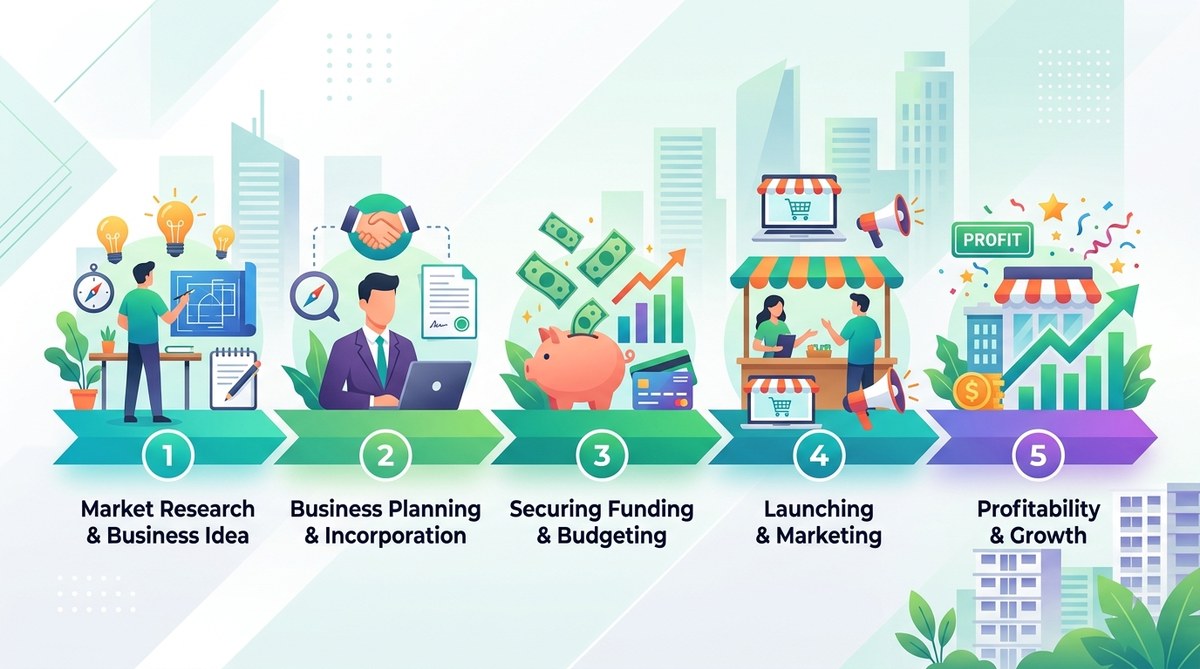
Starting a small business in Singapore is one of the most effective ways to take control of your financial future. You are not just trading time for money anymore. You are building something that can grow, generate income, and give you the freedom to design your life. But here is the truth that most guides skip: starting a business is easy. Building a profitable small business in Singapore is harder. The difference is not luck. It is the process you follow from day one.
This guide gives you 5 proven steps to validate your business idea, structure it for tax efficiency, fund it without breaking the bank, and reach paying customers in Singapore. You will learn what actually works for small businesses here, with a clear table of common mistakes and a practical checklist to get started this week.
Why Singapore Is a Great Place for a Small Business
Singapore has one of the most business friendly environments in the world. The government actively supports entrepreneurs with grants, low corporate tax rates, and a strong digital infrastructure. But that does not mean every business here succeeds. Many fail because they skip the groundwork. They rush to register a company before they know if anyone wants to pay for their product. Or they spend too much on office space and branding before they have a single customer.
A profitable small business in Singapore is built on three things: a real problem to solve, a lean cost structure, and a way to reach customers without burning cash. The steps below will walk you through each of these.
Step 1: Validate Your Business Idea Before You Spend a Cent
This is the step most aspiring entrepreneurs skip. They fall in love with their idea and rush to register a business, buy a domain, and print business cards. That is a mistake. You need to test your idea first.
How to validate your idea with minimal money
You do not need a survey or a focus group. You need real conversations with real potential customers. Here is how to do it:
- Identify 10 to 15 people who match your target customer profile in Singapore.
- Ask them about their struggles related to your business idea. Do not pitch anything.
- Listen for patterns. If multiple people mention the same pain point, you have something.
- Offer a simple solution. It could be a manual service, a basic prototype, or even a Google Form.
- Ask for payment upfront. This is the real test. If people are willing to pay, you have validation.
“The best way to validate a business idea is to try to sell it before you build it. If nobody buys, you saved yourself months of wasted effort.” — Paul Graham, startup advisor and co-founder of Y Combinator.
If you are thinking about businesses that require less capital, check out our guide on 15 high-paying side hustles in Singapore that actually work for ideas that can scale into full businesses.
Step 2: Choose the Right Business Structure for Tax and Liability
In Singapore, you have three main options for a small business structure. Each one affects how much tax you pay and how much personal risk you carry.
| Business Structure | Best For | Tax Rate (2026) | Personal Liability |
|---|---|---|---|
| Sole Proprietorship | Freelancers, solo operators testing an idea | Income taxed at personal income tax rates (up to 22%) | Unlimited liability. Your personal assets are at risk. |
| Limited Liability Partnership (LLP) | Two or more partners who want flexibility | Same as sole proprietorship, but partners share liability | Limited liability for each partner |
| Private Limited Company (Pte Ltd) | Serious businesses that plan to grow, raise money, or want lower tax rates | 17% corporate tax, with first SGD 100k of chargeable income effectively taxed at a much lower rate after incentives | Limited liability. Your personal assets are separate. |
For most people building a profitable small business in Singapore, a Pte Ltd is the right choice. It gives you better tax treatment, protects your personal savings, and makes it easier to attract investors later.
That said, if you are just starting with very little capital, a sole proprietorship can work for the first 6 to 12 months. Just know that your personal assets are on the line.
Step 3: Fund Your Business Without Going into Debt
One of the biggest reasons small businesses fail is cash flow problems. They spend too much money too early. The goal is to start with as little money as possible and let the business pay for its own growth.
Ways to start a profitable small business in Singapore with limited capital
- Bootstrapping. Use your own savings. Keep your day job while you build the business on the side.
- Government grants. Singapore offers several grants for small businesses, such as the Startup SG Founder scheme, which provides matching grants of up to SGD 30,000.
- Friends and family. Borrow from people who trust you. Keep it formal with a written agreement.
- Revenue based funding. Start selling immediately. Use the money from early customers to fund growth.
- Crowdfunding. Platforms like Kickstarter or local ones like FundedHere can help you raise money without giving up equity.
Avoid taking on high interest debt to fund your business. Credit cards and personal loans are dangerous for a young company. If you want to understand how to manage your personal finances while building a business, read our guide on how to build a 6-month emergency fund in Singapore on any salary. A strong emergency fund gives you the runway to take smart risks.
Step 4: Build a Customer Acquisition System That Costs Almost Nothing
You do not need a big marketing budget to get your first customers. You need a system that consistently brings in leads without spending money on ads.
Low cost customer acquisition methods for Singapore
- LinkedIn outreach. Connect with people in your target industry. Offer value before asking for anything.
- Community engagement. Join Singapore based Facebook groups, Telegram channels, and Reddit communities where your customers hang out.
- Content marketing. Write helpful articles or make short videos that answer your customers’ questions. This builds trust over time.
- Referral program. Give existing customers a discount or free service for referring friends.
- Partnerships. Partner with non competing businesses that serve the same audience. Cross promote each other.
Here is a simple weekly routine for your first 90 days:
- Monday: Write one helpful post on LinkedIn or Facebook.
- Tuesday: Reach out to 5 potential customers with a personalized message.
- Wednesday: Publish one short article or video on a topic your customers care about.
- Thursday: Follow up with everyone who replied to your messages.
- Friday: Ask your newest customers for referrals.
If you want to earn extra income while you build your business, consider our list of top strategies to increase your income fast in Singapore.
Step 5: Set Up Your Finances for Long Term Profitability
A profitable small business is not just about making sales. It is about keeping more of what you earn. Many small business owners in Singapore lose money to unnecessary fees, taxes they did not plan for, and poor cash flow management.
What you must do from day one
- Open a separate business bank account. Never mix personal and business money. It makes accounting a nightmare and can trigger an audit.
- Track every expense. Use a simple tool like Google Sheets or a free app. Know exactly where your money goes.
- Set aside money for taxes. The Singapore tax system requires you to estimate and pay your taxes in advance if you are a sole proprietor. For Pte Ltd, your corporate tax is filed annually, but you should set aside 10% to 15% of every payment you receive.
- Get an accountant or use accounting software. Even if you are small, proper bookkeeping saves you time and stress later.
For a deeper look at managing your personal and business finances together, see our article on 10 hidden bank fees Singaporeans pay and how to avoid them. Business accounts come with fees too, and many of them are avoidable.
Common financial mistakes small business owners make
- Not paying themselves a regular salary. This messes up personal budgeting.
- Using personal credit cards for business expenses. Harder to track and claim.
- Ignoring cash flow forecasting. You can be profitable on paper and still run out of money.
- Delaying tax payments. The penalties add up fast.
The One Thing That Separates Profitable Businesses from the Rest
Most people start a business and treat it like a hobby. They work when they feel inspired. They avoid the hard tasks like sales and follow ups. They give up after a few months because they do not see results.
A profitable small business in Singapore requires discipline. You have to show up every day and do the work that does not feel glamorous. You have to talk to customers, manage your numbers, and keep your costs low. There is no shortcut.
If you are serious about building wealth through your business and your personal finances, you might also want to read our guide on REITs vs property investment: which makes more sense for Singaporeans? Once your business generates consistent profits, you will want to put that money to work.
Your Next Steps to Start a Profitable Small Business in Singapore
You now have the 5 steps. Do not try to do them all at once. Pick the first step and complete it this week. Talk to potential customers. Write down what you learn. That alone puts you ahead of 90% of people who only read about starting a business.
Here is what your first week should look like:
- Day 1: Write down your business idea and the problem it solves.
- Day 2: Identify 10 people to talk to. Reach out to them.
- Day 3: Have conversations. Listen more than you talk.
- Day 4: Analyze what you heard. Is there a real need?
- Day 5: Decide whether to proceed or adjust your idea.
- Day 6: If you are moving forward, research the best business structure for your situation.
- Day 7: Rest and plan your next week.
Building a profitable small business in Singapore is not about being the smartest person in the room. It is about being consistent, listening to your customers, and managing your money wisely. You already have what you need to start. The only question is whether you will take the first step today.