
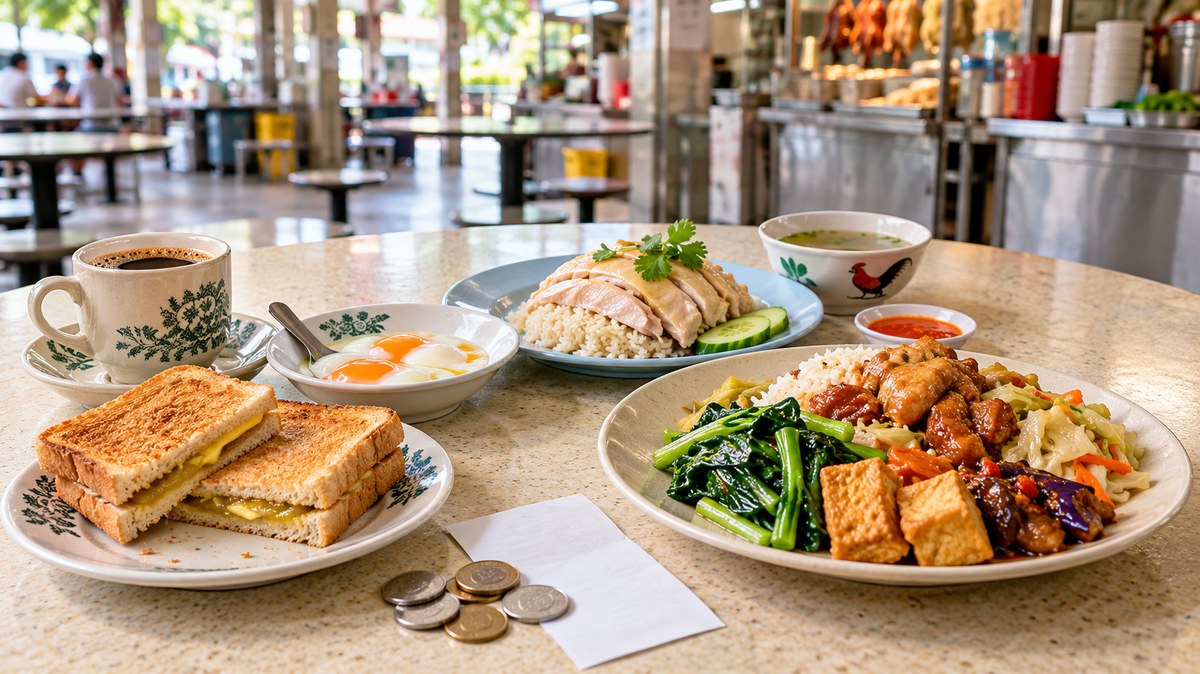
You walk into a coffee shop near your office. A mixed vegetable rice with two vegetables and a piece of fish costs $4.50. Down the road, a poke bowl runs $13.90. Across the street, a bowl of laksa is $5.00. Singapore is a paradox for the budget-conscious foodie. You can spend $3 on a plate of carrot cake or $18 on a smoothie bowl that looks pretty but leaves you hungry. The trick is knowing where to look and how to order.
Eating healthy in Singapore for under $15 a day is possible without touching instant noodles. Focus on hawker centers for budget protein and vegetables, use grocery delivery apps for bulk staples, and avoid sugary drinks. Plan three meals around whole foods. This approach saves money and keeps your energy steady.
Why $15 a Day Works in Singapore
The average meal at a hawker center costs between $3.50 and $6.00. A cai fan (mixed vegetable rice) with two vegetables and one protein usually lands around $4.00 to $5.00. That leaves room for a $2.00 breakfast and a $4.00 dinner. You can still grab a kopi or a fresh juice and stay under $15.
Many people assume that eating healthy means buying cold-pressed juices, organic salads, and grain bowls from cafes. Those meals often cost $12 to $18 each. That is not realistic for daily eating. The real affordable healthy food Singapore under $15 lives in hawker centers, food courts, and simple grocery store meals.
Where to Find Affordable Healthy Food Singapore Under $15
You do not need to cook every meal. You just need to pick the right places. Here are the best spots for budget-friendly, nutritious food.
Hawker Centers and Food Courts
Hawker centers are the backbone of affordable eating in Singapore. They offer fresh, cooked-to-order meals at low prices. The key is choosing stalls that serve vegetables, lean protein, and whole grains.
- Mixed vegetable rice (cai fan) stalls: These are everywhere. Pick brown rice, two green vegetables (like kangkong or broccoli), and one protein (tofu, egg, or fish). Avoid the fried items and heavy sauces.
- Yong tau foo: You choose your ingredients and they are boiled or fried. Stick to tofu, mushrooms, leafy greens, and tomato. Ask for clear broth instead of the sweet sauce. A bowl costs $4.00 to $6.00.
- Fish soup (sliced fish bee hoon): A bowl with sliced fish, vegetables, and brown rice noodles costs around $5.00. Ask for less oil and no evaporated milk in the broth.
- Popiah and spring rolls: Fresh popiah (spring rolls) filled with vegetables and peanut powder costs $2.00 to $3.00. They are light, healthy, and filling.
Budget-Friendly Restaurant Chains
Some restaurant chains offer healthy meals under $10. These are good for days when you want a sit-down meal.
- Greendot: Their bento sets and bowls range from $8.90 to $12.90. They focus on plant-based protein and vegetables.
- Poke Theory: A regular bowl costs around $10.90. Choose brown rice, lean fish (tuna or salmon), and extra vegetables. Skip the creamy sauces.
- The Soup Spoon Union: Soups and bread bowls cost $6.00 to $9.00. Their lentil soup, minestrone, and chicken soup are filling and low in fat.
- Haakon Superfoods and Juice: Smoothie bowls and salads cost $10.00 to $14.00. Their portions are large enough for a meal.
Grocery Store Meals (No Cooking Required)
You can eat healthy without cooking. Many supermarkets sell ready-to-eat meals that are cheaper than restaurant food.
- Cold pressed juice and pre-made salads: NTUC FairPrice and Cold Storage sell pre-packed salads for $4.50 to $6.00. Pair one with a hard-boiled egg from the same store ($0.80).
- Sushi takeaway sets: Sushi Express and Sakae Sushi have sets with brown rice, salmon, and vegetables for $5.00 to $8.00.
- Greek yogurt and fruit: A tub of Greek yogurt ($3.50) and a banana ($0.50) make a filling breakfast or snack.
How to Build a Day of Meals Under $15
Here is a simple three-step process to plan your day.
- Start with breakfast under $2.50. Options include a banana and a cup of kopi O kosong ($1.50), a hard-boiled egg from a hawker stall ($1.00), or a bowl of oatmeal from home ($0.50).
- Make lunch your biggest meal. Spend $4.00 to $6.00 on a balanced plate. Mixed vegetable rice with brown rice, two vegetables, and tofu or fish works well. Add a glass of water or unsweetened iced tea.
- Keep dinner light but filling. Spend $3.00 to $5.00 on a bowl of fish soup, yong tau foo, or a salad from a grocery store. Avoid fried food and heavy sauces.
Common Mistakes That Blow Your Budget
Many people try to eat healthy but end up spending more than $15. Here are the most common mistakes and how to fix them.
| Mistake | Why It Costs You | Better Alternative |
|---|---|---|
| Buying bottled smoothies or juices | $5.00 to $8.00 for a small drink | Drink water or kopi O kosong ($1.20) |
| Ordering delivery for every meal | $4.00 to $6.00 delivery fee per order | Walk to a hawker center or food court |
| Choosing salad bars with heavy dressings | $10.00 to $15.00 for a small salad | Ask for dressing on the side or use lemon juice |
| Eating at cafes for lunch | $12.00 to $18.00 per meal | Go to a cai fan stall for $4.50 |
| Buying pre-cut fruit packs | $3.00 for a small pack | Buy whole fruit at a wet market ($1.00 for 3 apples) |
Smart Shopping Tips for Long-Term Savings
Eating healthy for under $15 a day gets easier when you shop smart. Here are a few strategies.
- Buy rice and oats in bulk. A 5kg bag of brown rice costs about $8.00 and lasts a month. A large bag of rolled oats costs $5.00 and makes 20 servings.
- Use wet markets for vegetables and fruit. Wet markets like Tekka Market or Tiong Bahru Market sell vegetables at half the price of supermarkets. A bunch of spinach costs $1.00.
- Cook one or two meals per week. If you cook a big batch of soup or curry on Sunday, you can eat it for lunch or dinner for three days. That saves $3.00 to $5.00 per day.
- Avoid sugary drinks. A can of soda costs $1.50. A bottle of fruit juice costs $3.00. Water is free. Kopi O kosong is $1.20. These small savings add up to $30.00 to $60.00 per month.
“I used to spend $18 a day on food because I bought salads from cafes. When I switched to cai fan and yong tau foo at the hawker, my food bill dropped to $10 a day. I actually felt fuller because I got more vegetables and protein.” — Mei Ling, a freelance graphic designer in Singapore.
The Best Time to Eat for Maximum Value
Timing matters. Hawker stalls often have lower prices during off-peak hours. Lunch rush (11:30am to 1:30pm) is the most expensive. If you can eat at 10:30am or 2:00pm, you might get a discount or a larger portion.
Some stalls also offer set meals that are cheaper than ordering a la carte. Look for “economy rice” or “value set” signs. These usually cost $3.50 to $4.50 and include rice, one vegetable, and one protein.
How to Handle Social Eating Without Breaking the Bank
Eating out with friends or colleagues can push your budget. But you can still stay under $15.
- Suggest a hawker center instead of a restaurant. Most people will agree because it is cheaper for everyone.
- Order a starter or side dish instead of a full meal. A bowl of soup or a small salad costs $5.00 to $8.00.
- Share a main dish. Many Asian dishes are served family-style. Split a plate of stir-fried vegetables and rice with a friend.
- Skip the drinks. Order water or bring your own. That saves $2.00 to $5.00 per meal.
A Sample Day Under $15
Here is a realistic day of eating that costs $12.50 total.
| Meal | Food | Cost |
|---|---|---|
| Breakfast | Kopi O kosong and a banana | $1.70 |
| Lunch | Mixed vegetable rice (brown rice, kangkong, broccoli, tofu) | $4.50 |
| Snack | An apple from the wet market | $0.80 |
| Dinner | Fish soup with sliced fish and vegetables | $5.50 |
| Total | $12.50 |
You have $2.50 left for a treat like a small ice cream or a second kopi. That is still under $15.
The Real Cost of Instant Noodles
Instant noodles are cheap, but they cost you in other ways. A pack costs $0.50 to $1.00. But they are low in protein, fiber, and vitamins. You end up hungry again in two hours. That leads to snacking or buying a second meal. The total cost for a day of instant noodles plus snacks can easily hit $8.00 to $12.00. And you feel tired and bloated.
For the same money, you can eat real food that keeps you full for four to five hours. The choice is clear.
Make It a Habit
The first week of eating this way might feel strange. You will need to learn which stalls serve good food and which ones use too much oil. After two weeks, it becomes automatic. You will know that the cai fan stall at the corner of your office serves fresh vegetables for $4.00. You will know that the fish soup stall at the market closes at 2pm. You will know that a banana and a hard-boiled egg cost less than a muffin from a cafe.
This habit frees up money for other things. Maybe you can put that extra $5.00 a day into a savings account. Over a month, that is $150.00. Over a year, that is $1,800.00. That is real money that can go toward a trip, a course, or an emergency fund.
Your Next Step
Start tomorrow. Pick one meal and buy it from a hawker center. Choose brown rice, two vegetables, and one protein. Skip the drink. See how you feel. If it works, do it again the next day. Within a week, you will have a new routine that is good for your wallet and your body.
For more ways to stretch your budget, check out our guide on how to save money on groceries in Singapore without sacrificing quality. You can also read about the real cost of dining out in Singapore to see where your money goes.
Eating Well Is a Form of Self-Care
You do not need to spend a lot to eat food that makes you feel good. Singapore has some of the best affordable food in the world. The stalls and shops are already there. You just need to choose them. Your body will thank you, and your bank account will too.
Start small. Try one change today. You have nothing to lose except the instant noodles.