
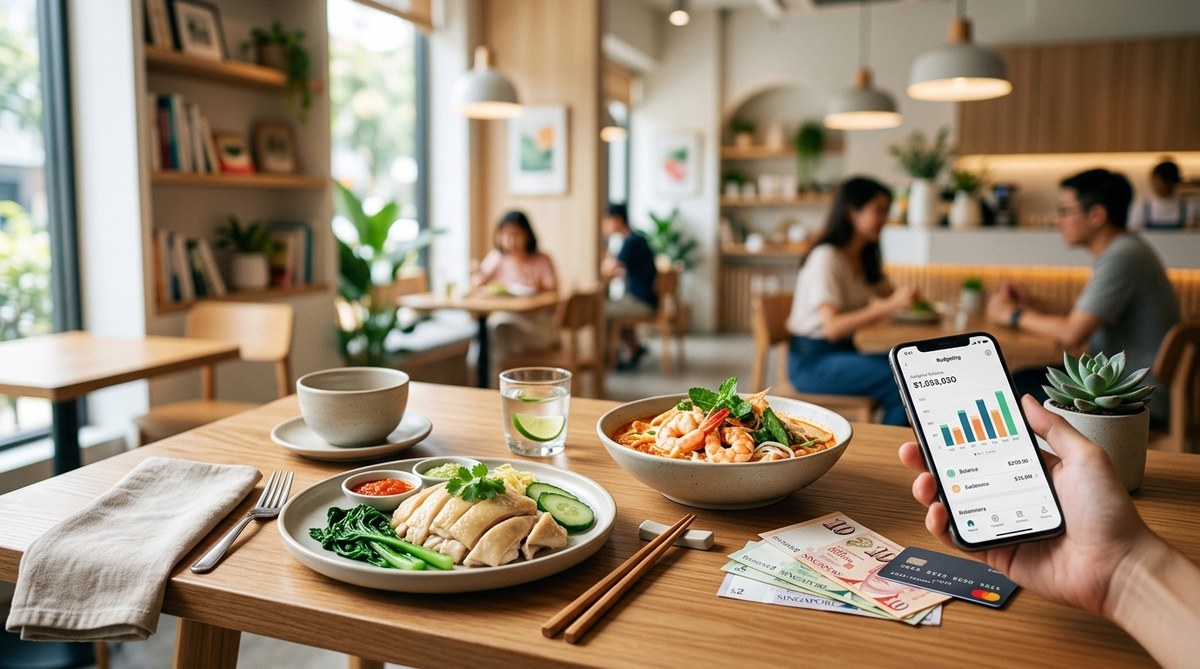
Singapore is a food lover’s paradise. From Michelin-starred hawker stalls to sleek rooftop bars, the options are endless. But that paradise comes with a price tag that can quietly eat through your monthly budget. A casual dinner at a mid-range restaurant, a couple of grab-and-go coffees, and a weekend brunch with friends can easily add up to $400 or more per month. For budget-conscious expats, young professionals, and middle-income locals, the question isn’t whether to eat out. It’s how to do it without feeling guilty when the credit card bill arrives.
The real cost of dining out in Singapore goes beyond the menu price. Service charges, GST, tipping expectations, drinks markups, and delivery fees can inflate your bill by 25% or more. This guide breaks down every hidden cost, shows you how to compare meal options, and gives you a step-by-step plan to save up to $150 a month while still enjoying great food.
What You Actually Pay for a Meal in Singapore
When you look at a menu, the number you see is rarely the number you pay. The final bill includes several layers of extra costs. Understanding these is the first step to taking control of your spending.
Here is the breakdown of the most common charges:
- Service Charge: Most mid-range and fine dining restaurants in Singapore add a 10% service charge. This is standard and non-negotiable.
- GST (Goods and Services Tax): The current GST rate is 9%. This is applied to the total bill after the service charge.
- Tipping: Tipping is not mandatory in Singapore, but some restaurants include a discretionary service charge. If you tip, add another 5% to 10%.
- Drinks Markup: Soft drinks, juices, and alcohol have some of the highest markups. A can of Coke that costs $0.50 at a supermarket can be $3.50 at a cafe.
- Corkage Fees: Bringing your own wine? Many restaurants charge between $30 and $50 per bottle.
- Delivery Platform Fees: Apps like GrabFood, Foodpanda, and Deliveroo add delivery fees, service fees, and sometimes surge pricing. A $10 meal can become $16 after fees.
Let’s look at a real example.
| Item | Cost Breakdown for a $25 Main Course |
|---|---|
| Menu price | $25.00 |
| 10% service charge | + $2.50 |
| 9% GST on subtotal ($27.50) | + $2.48 |
| Optional 10% tip | + $2.75 |
| Total you pay (with tip) | $32.73 |
That $25 dish actually costs you $32.73. Over a month of eating out three times a week, that extra 30% adds up to significant money.
The Hidden Costs of Convenience
Delivery apps have changed how we eat. But they have also changed how much we spend. The cost of dining out in Singapore spikes when you factor in the convenience premium.
Delivery markups include:
1. Higher menu prices: Many restaurants list items 10% to 20% higher on delivery apps to cover platform commissions.
2. Delivery fee: Ranges from $1.50 to $6.00 depending on distance and demand.
3. Service fee: Usually around $0.50 to $1.50 per order.
4. Small order fee: Some platforms charge an extra $2 to $3 if your order is below a certain amount.
5. Surge pricing: During peak hours or bad weather, fees can double.
Expert advice: If you order delivery, always compare the total cost on the app against the menu price at the restaurant. Sometimes picking up your own food saves you 25% or more. And if you’re ordering for one, the small order fee can make a $8 meal cost $13. That’s a 62% premium for convenience.
How to Eat Well Without Breaking the Bank
You do not have to give up eating out. You just need a smarter strategy. Here is a step-by-step process to reduce your dining costs while still enjoying Singapore’s incredible food scene.
1. Set a weekly dining budget.
Decide how much you want to spend on meals outside your home each week. For example, $80 per week for a single person. This includes coffee runs, lunch with colleagues, and weekend dinners. Track it in a simple app or notebook.
2. Choose hawker centers and food courts for most meals.
A plate of chicken rice at a hawker center costs $3.50 to $5.00. The same dish at a restaurant costs $12 to $18. If you replace two restaurant lunches per week with hawker meals, you save roughly $20 to $30 per week.
3. Use credit card rewards strategically.
Certain cashback credit cards in Singapore offer higher rebates on dining. For example, some cards give 4% to 6% cashback at restaurants and cafes. Over a year, that can mean $100 to $200 back in your pocket. Check out our guide to the best cashback credit cards in Singapore for everyday spending 2026 to find one that fits your habits.
4. Skip the drinks.
Order tap water instead of bottled water or soft drinks. A meal with a drink can cost 30% to 50% more. If you want a beverage, bring your own reusable bottle.
5. Share dishes with friends.
Portions at many restaurants are generous. Splitting two mains and a side between two people can cut your individual cost by 30% to 40%.
6. Take advantage of lunch sets and early bird specials.
Many restaurants offer lunch sets that are 20% to 40% cheaper than dinner menus. Early bird specials before 6:30 PM can also save you money.
7. Avoid peak hours and surge pricing.
Eating dinner at 6:00 PM instead of 7:30 PM can mean lower prices at some places. For delivery, order during off-peak times to avoid surge fees.
Common Mistakes That Inflate Your Dining Costs
Even savvy spenders fall into these traps. Here are the most common ones and how to avoid them.
- Ordering delivery for one person: The fees and minimum order requirements make single-person delivery very expensive. Cook at home or pick up food yourself.
- Not checking the bill for errors: Mistakes happen. A 2025 survey found that 1 in 5 diners in Singapore noticed an incorrect charge on their bill. Always check before paying.
- Paying with a card that has no dining rewards: Using a debit card or a card with low cashback means you are leaving money on the table. Use a card that rewards dining.
- Assuming hawker food is always cheap: Some trendy hawker stalls charge $8 to $12 for a single dish. Compare prices before you queue.
- Falling for “set meals” that include extras you don’t want: A set meal might seem like a deal, but if it includes a drink and dessert you didn’t plan to eat, you are spending more than necessary.
- Buying bottled water at restaurants: At $2 to $4 per bottle, this is one of the highest markup items on any menu. Drink tap water instead.
The Real Numbers: How Much You Can Save
Let’s put this into a realistic monthly scenario for a young professional living in Singapore.
| Expense Category | Before (Monthly) | After (Monthly) | Savings |
|---|---|---|---|
| Restaurant lunches (10 x $15) | $150 | $75 (10 x $7.50 hawker) | $75 |
| Weekend dinners (4 x $35) | $140 | $100 (4 x $25 with sharing) | $40 |
| Coffee & drinks (15 x $5) | $75 | $37.50 (15 x $2.50 homemade) | $37.50 |
| Delivery orders (4 x $18) | $72 | $0 (pick up instead) | $72 |
| Total | $437 | $212.50 | $224.50 |
That is over $220 in savings per month. In one year, that becomes more than $2,600. That money could fund a 6-month emergency fund, a small investment portfolio, or a vacation.
Making Your Money Work Harder
Saving money on dining is not just about cutting back. It is about redirecting those savings toward your financial goals. If you save $220 per month and invest it in a simple index fund with an average 6% annual return, you could have over $15,000 in five years. That is a meaningful amount of money for a retirement nest egg or a down payment on a home.
If you want to take this further, consider using a high-interest savings account to park your dining budget. Some accounts in Singapore offer up to 3% interest. That way, even the money you plan to spend earns a little before you use it. Check out our comparison of DBS Multiplier vs OCBC 360 to see which one fits your lifestyle.
A Simple System to Track Your Dining Spending
You do not need a complicated spreadsheet. Here is a lightweight system that works.
- Set a monthly dining cap. For example, $250 for all meals outside the home.
- Use a budgeting app. Apps like Seedly, YNAB, or even Google Sheets can track your spending.
- Categorize your meals. Label each expense as “hawker,” “restaurant,” “delivery,” or “coffee/drinks.”
- Review weekly. Every Sunday, check how much you have left. Adjust your plans for the coming week.
- Reward yourself. If you come in under budget, roll the surplus into a fun category like entertainment or travel.
This system takes 10 minutes per week. It gives you full visibility into where your money goes. And it helps you make intentional choices instead of automatic ones.
Your Next Step
The cost of dining out in Singapore does not have to control your finances. By understanding the hidden charges, choosing where and when you eat, and using the right tools, you can enjoy amazing food while keeping your budget intact.
Start small. Pick one change from this guide and apply it this week. Maybe it is skipping the soft drink at dinner. Maybe it is replacing two delivery orders with pickups. Once that becomes a habit, add another change. Over time, these small shifts will compound into real savings.
Your wallet will thank you. And your taste buds will still be happy.