
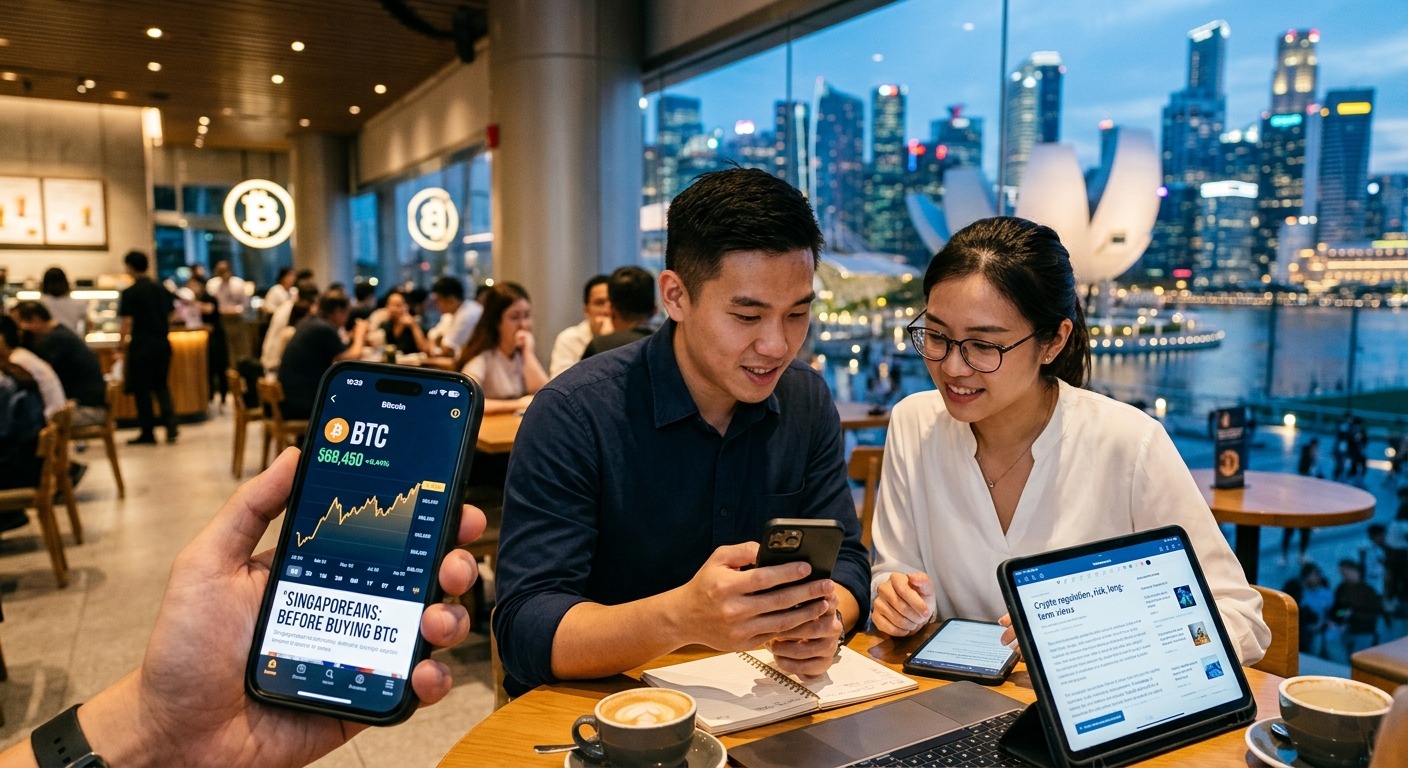
Plenty of Singaporeans have done the hard work. CPF contributions are on track. An emergency fund sits in a high-yield savings account. A robo-advisor handles the diversified, boring part of the portfolio. And yet Bitcoin keeps surfacing in the news, in the office group chat, at family dinners. If you have your financial foundations in place and are wondering whether a small crypto position deserves consideration, here is the straight talk you need before spending a single dollar.
What You Need to Know First
Buying Bitcoin in Singapore is genuinely straightforward if you follow the right steps. The Monetary Authority of Singapore has licensed several exchanges, giving local buyers a layer of regulatory protection that is not available in many other markets. The bigger decision is not where to buy, but how to store what you buy. Understanding the difference between exchange custody and holding your own keys is what separates a considered allocation from a poorly managed one.
How Singapore Regulates Crypto Buying and Selling
Under Singapore’s Payment Services Act, any platform offering digital payment token services must hold a licence from the Monetary Authority of Singapore. This matters for buyers because it means licensed exchanges must meet anti-money-laundering requirements, segregate customer funds, and submit to regulatory oversight. Approved firms are confirmed on MAS’s digital payment token services register, and checking that list before opening any account is a sensible first step.
Singapore does not treat Bitcoin as legal tender, but individuals who buy and hold it as investors are generally not subject to capital gains tax. The Inland Revenue Authority of Singapore takes the position that gains from personal investment activity are not taxable income. This changes if you trade frequently enough that the activity resembles a business, in which case a tax advisor’s input is worth the cost.
What Singapore offers is genuine regulatory clarity. You are not buying through unregulated channels or in a legal grey zone. You are using a licensed financial platform that has passed a meaningful compliance bar. That does not eliminate risk entirely, but it changes the risk profile significantly compared to using offshore exchanges with no oversight at all.
Which Exchanges Are Licensed to Operate Here
Three platforms come up most often in Singapore conversations: Coinhako, Independent Reserve, and Crypto.com. All three hold MAS licences. Each has a different feel, and the right choice depends on what you value most as a first-time buyer.
MAS-Licensed Platforms: Key Differences for Singapore Buyers
| Exchange | MAS Licensed | Standard Fee | SGD Deposit Method | Supported Assets |
|---|---|---|---|---|
| Coinhako | Yes | ~0.5% | Bank transfer, PayNow | 200+ |
| Independent Reserve | Yes | ~0.5% | Bank transfer | Major cryptos only |
| Crypto.com | Yes | 0% to 0.075% | Bank transfer | 350+ |
Coinhako is Singapore-founded and has been operating locally since 2014. Its interface tends to feel familiar to Singaporean users, and PayNow support makes funding your account very fast. Independent Reserve is Australian-built but has a strong Singapore presence and is often preferred by buyers who want a focused, no-frills experience with Bitcoin and Ethereum rather than hundreds of altcoins. Crypto.com has the widest asset selection and competitive fees at higher volume tiers, but its app can feel cluttered for someone who simply wants to buy a bit of Bitcoin and hold it.
For a first-time buyer with a clear and simple goal, any of the three works. The more important question is not which platform you choose. It is what you do with your Bitcoin after you have bought it.
How to Actually Buy Bitcoin: A Step-by-Step Walk-Through
The process is simpler than most people expect. Once you have chosen a licensed exchange, here is how a typical first purchase unfolds:
- Create your account. Sign up on the exchange website or app. Use an email address you actively check and enable two-factor authentication from day one.
- Complete identity verification. All MAS-licensed exchanges require KYC. Upload your NRIC or passport. Verification usually takes a few minutes to a few hours.
- Deposit Singapore dollars. Initiate a bank transfer or PayNow transfer from your local bank account. Most exchanges credit funds the same day.
- Place a buy order. Search for Bitcoin (ticker: BTC), enter the SGD amount you want to spend, and review the fee estimate before confirming. Starting with a small amount while you get comfortable with the platform is a reasonable approach.
- Record the transaction details. Note the date, SGD amount spent, BTC quantity received, and fee paid. You will need this information if you ever sell or want to track your cost basis.
- Think about storage before you add more. This is the step most first-timers skip entirely. Read the next section before increasing your position beyond a token amount.
Many Singaporeans approach Bitcoin purchases the way they treat robo-advisor top-ups: a fixed amount, on a fixed schedule, without trying to time the market. This dollar-cost averaging approach removes the anxiety of wondering whether today is a good or bad day to buy. Over a long enough horizon, the entry price matters less than the consistency of the habit.
The Custody Risk That Nobody Explains Clearly Enough
Here is the part that matters most and gets least attention in beginner guides. When your Bitcoin sits on an exchange, you do not actually own Bitcoin. You hold a promise from the exchange that they will give you Bitcoin when you request it. That is a meaningful distinction.
Exchanges can freeze withdrawals. They can be hacked. They can become insolvent. The collapse of FTX in 2022 wiped out billions of dollars of customer assets globally, including Singapore users. MAS licensing provides more protection than no regulation at all, but it does not make an exchange as safe as a SDIC-backed bank deposit or a CPF account.
Before you add any meaningful sum to your position, take time to understand how Bitcoin wallets work and what your self-custody options actually are. The main types break down like this:
- Software wallets (hot wallets): Apps on your phone or desktop that store your private keys. Convenient for smaller amounts. Being connected to the internet means they carry more exposure to attacks than offline alternatives.
- Hardware wallets (cold wallets): Physical devices such as a Ledger or Trezor that keep your private keys completely offline. Widely regarded as the gold standard for anyone holding more than a few hundred dollars of crypto. Devices typically cost SGD 100 to SGD 300 upfront.
- Paper wallets: Your keys written or printed on paper and stored offline. Very secure if handled correctly, but unforgiving if the paper is lost, damaged, or seen by the wrong person.
- Exchange custody: Leaving coins on the platform where you bought them. Acceptable for small amounts or during an active trading window, but not a long-term storage plan for any amount you genuinely care about preserving.
The phrase “not your keys, not your coins” has been repeated so many times in crypto communities that it starts to sound like background noise. It is not noise. It is the foundational principle of Bitcoin ownership. An exchange is a convenient place to buy. It was never designed to be a permanent vault.
Working Out a Sensible Allocation Size
This is the question most articles sidestep with vague advice. “Only invest what you can afford to lose” is technically true but not useful on its own. Here is a more practical framework for Singaporeans who already have their core finances in order.
Treat Bitcoin as a separate speculative sleeve, sitting completely outside your CPF accounts, your emergency fund, and your robo-advisor portfolio. Financial planners who acknowledge crypto at all tend to suggest keeping that sleeve between 1% and 5% of total investable assets outside CPF.
If your investable assets outside CPF total SGD 100,000, that translates to a Bitcoin allocation of SGD 1,000 to SGD 5,000. Small enough that a complete loss does not derail your retirement planning. Large enough that meaningful upside actually registers rather than feeling purely symbolic.
A few hard boundaries worth keeping in mind regardless of where you land on that range: never fund a crypto position with borrowed money, never draw from insurance premium reserves or housing loan buffers, and never use your emergency fund. Bitcoin has dropped more than 80% from its peak on multiple occasions, and those drawdowns can stretch across two or three years. The investors who suffered most during those periods were not simply those who bought at the top. They were those who bought with money they could not afford to have locked up for years and were forced to sell at the worst possible moment.
From a Strong Financial Base to a Considered First Purchase
If you have arrived at this question from a position of financial strength, that is exactly the right sequence. CPF sorted. Emergency fund funded. Robo-advisor running. Now a small, deliberate speculative position in the world’s oldest and most liquid cryptocurrency.
Singapore gives you a genuine edge as a buyer. A regulated marketplace. No capital gains tax for individual investors. PayNow-compatible exchanges that make funding accounts fast. A regulator that has engaged seriously with crypto policy rather than banning it outright or ignoring it entirely.
Use those advantages by building on the right foundations. Verify your exchange holds an MAS licence. Understand self-custody before your position grows beyond a token amount. Size your allocation based on actual risk tolerance, not the enthusiasm you feel on a day when Bitcoin’s price is climbing 15%. And if the tax implications of your specific situation are unclear, a brief conversation with a Singapore-based tax advisor before the portfolio grows is money very well spent.
The first purchase does not have to be large. It just has to be informed.