
Managing investments across multiple platforms can feel like juggling with too many balls in the air. One brokerage for your Singapore stocks, another for US equities, a crypto exchange, maybe some REITs scattered elsewhere. Checking each platform separately wastes time and makes it nearly impossible to see your true asset allocation or overall returns.
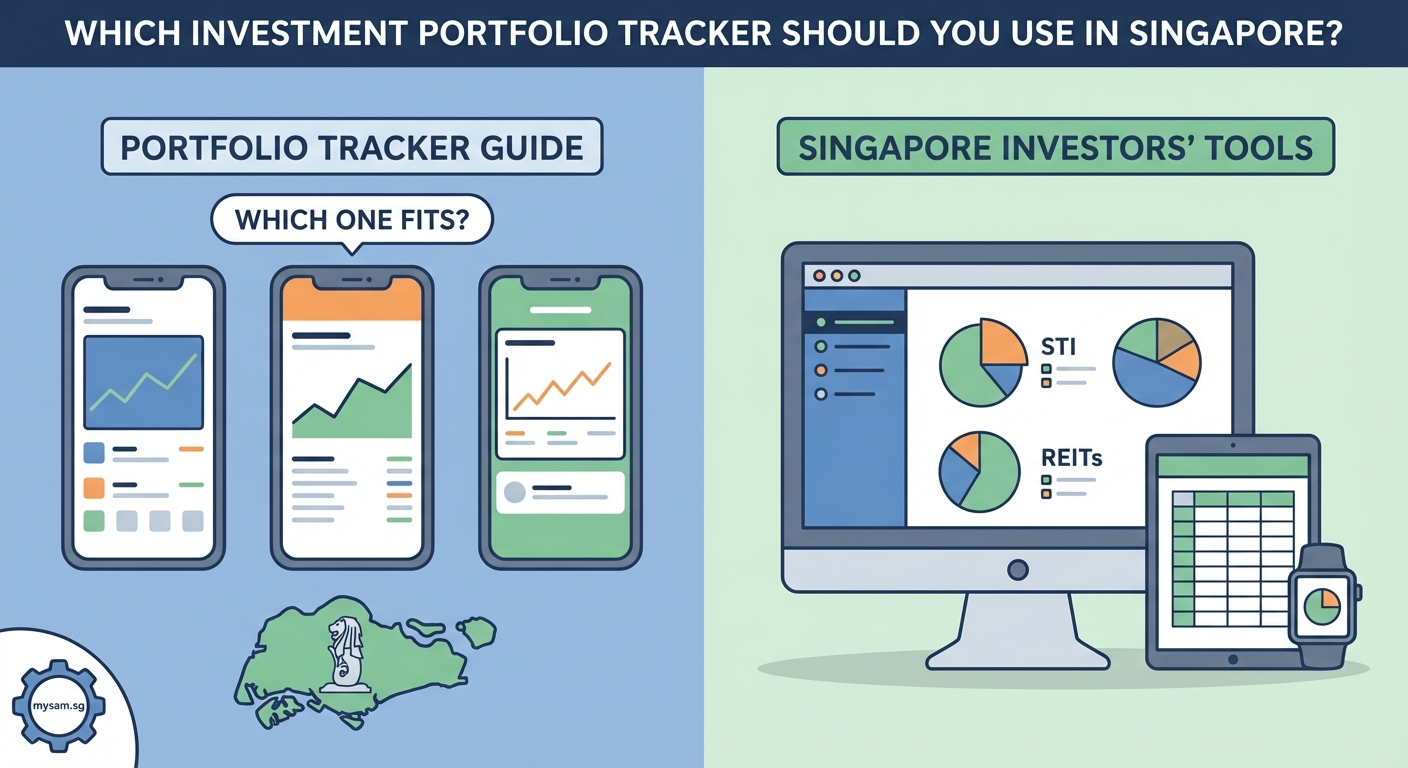
An investment portfolio tracker consolidates all your holdings from different brokerages, exchanges, and asset classes into a single dashboard. Singapore investors benefit from tracking SGX stocks, US equities, ETFs, crypto, and bonds together, gaining clear visibility on performance, asset allocation, and dividend income without logging into multiple platforms daily.
Why Singapore investors need portfolio tracking
Most retail investors in Singapore hold assets across several platforms. You might have SGX stocks with Tiger Brokers, US stocks with Interactive Brokers, crypto on Binance, and bonds through DBS Vickers.
Each platform shows only its slice of your portfolio. You miss the big picture.
Without centralized tracking, you cannot answer basic questions. What percentage of your net worth sits in tech stocks? Are you overweight in a single sector? How much total dividend income did you collect this quarter?
Manual spreadsheets work until they don’t. Updating prices daily becomes tedious. Currency conversions between SGD, USD, and other currencies introduce errors. One missed update and your numbers drift out of sync.
Portfolio trackers automate this grunt work. They pull live prices, calculate returns, convert currencies, and show your complete financial picture in one screen.
What features matter most
Not all portfolio trackers serve Singapore investors equally well. Some lack SGX stock support. Others charge high fees or miss crypto integration.
Here are the must-have features:
- Support for SGX stocks and Singapore REITs
- US stock and ETF tracking with real-time or delayed pricing
- Cryptocurrency integration for Bitcoin, Ethereum, and altcoins
- Multi-currency support with automatic SGD conversion
- Dividend tracking and income reporting
- Asset allocation breakdowns by sector, geography, and asset class
- Performance metrics including total return, IRR, and XIRR
- Mobile app for on-the-go monitoring
Nice-to-have features include tax reporting, transaction import from brokers, and portfolio sharing with financial advisors.
Top investment portfolio trackers for Singapore
Several tools dominate the Singapore market. Each has strengths and weaknesses depending on your investment style.
Google Sheets or Excel
The free DIY option. Build your own tracker with formulas pulling live prices from Google Finance or Yahoo Finance.
Pros: Complete control, no subscription fees, customizable to your exact needs.
Cons: Time-intensive setup and maintenance, no automatic transaction import, prone to formula errors, limited mobile experience.
Best for: Investors with simple portfolios who enjoy spreadsheet work and want zero recurring costs.
StocksCafe
A Singapore-focused platform built specifically for local investors. Covers SGX stocks comprehensively with detailed analytics on dividends and corporate actions.
Pros: Strong SGX coverage, dividend tracking, free tier available, local community support.
Cons: Limited US stock features on free tier, no native crypto support, interface feels dated compared to modern apps.
Best for: Singapore investors heavily weighted toward SGX stocks and REITs who prioritize dividend income tracking.
Sharesight
An Australian platform popular across Asia-Pacific markets. Offers robust tracking for stocks, ETFs, and managed funds with excellent tax reporting.
Pros: Automatic broker import for major platforms, comprehensive performance reports, multi-currency support, strong customer support.
Cons: Subscription required for full features, crypto support limited, overkill for simple portfolios.
Best for: Active traders with multiple brokerage accounts who need detailed performance analytics and tax documentation.
Delta and Blockfolio (now FTX)
Mobile-first apps designed primarily for cryptocurrency tracking but expanding into traditional assets.
Pros: Excellent crypto support, clean mobile interface, real-time alerts, free basic features.
Cons: Weak traditional stock features, limited dividend tracking, less suitable for stock-heavy portfolios.
Best for: Crypto-focused investors with some traditional holdings who prefer mobile-first experiences.
Yahoo Finance
The veteran platform offering free portfolio tracking with broad market coverage.
Pros: Completely free, covers global markets including SGX, simple interface, widely recognized brand.
Cons: Basic features only, no automatic import, limited performance analytics, ad-supported.
Best for: Casual investors wanting basic tracking without paying for premium features.
Personal Capital and Empower
US-based platforms with wealth management integration. Strong on retirement planning and net worth tracking.
Pros: Comprehensive financial picture including bank accounts and loans, retirement planning tools, free core features.
Cons: US-centric design, limited SGX support, requires linking bank accounts, aggressive wealth management upsells.
Best for: Singapore investors with significant US holdings who want holistic financial planning beyond just investments.
How to choose your tracker
Selecting the right investment portfolio tracker depends on your specific situation. Follow these steps:
-
List all your current investment accounts and asset types. Include brokerages, crypto exchanges, robo-advisors, and any other platforms holding your money.
-
Identify your primary tracking needs. Do you prioritize dividend income? Total return? Tax reporting? Asset allocation? Different trackers excel at different metrics.
-
Test free versions or trials. Most platforms offer free tiers or trial periods. Spend a week entering your holdings and generating reports before committing to paid plans.
-
Calculate the time-versus-money tradeoff. Free spreadsheets cost time. Paid trackers cost money but save hours monthly. Value your time appropriately.
-
Check mobile app quality if you monitor investments frequently. Some investors check daily, others monthly. Match the tool to your monitoring habits.
Common tracking mistakes to avoid
Even with good tools, investors make predictable errors that distort their portfolio view.
| Mistake | Why it happens | How to fix it |
|---|---|---|
| Forgetting to log transactions | Manual entry feels tedious | Set a weekly calendar reminder or use auto-import features |
| Ignoring currency impact | Tools show returns in USD but you spend SGD | Always review performance in your home currency (SGD) |
| Excluding cash positions | Cash feels like “not investing” | Track cash as an asset class to see true allocation |
| Missing corporate actions | Stock splits and dividends complicate tracking | Use platforms that automatically adjust for corporate actions |
| Comparing to wrong benchmarks | Using S&P 500 for a global portfolio | Match benchmarks to your actual allocation (STI for SGX, MSCI World for global) |
Another common trap: obsessing over daily fluctuations. Portfolio trackers make checking performance addictive. You see every tick up or down.
This creates emotional investing. You panic sell during dips or chase performance during rallies.
Set a fixed schedule for portfolio reviews. Monthly or quarterly checks provide enough information without triggering emotional decisions. Daily monitoring rarely improves long-term returns and often hurts them.
Setting up your first tracker
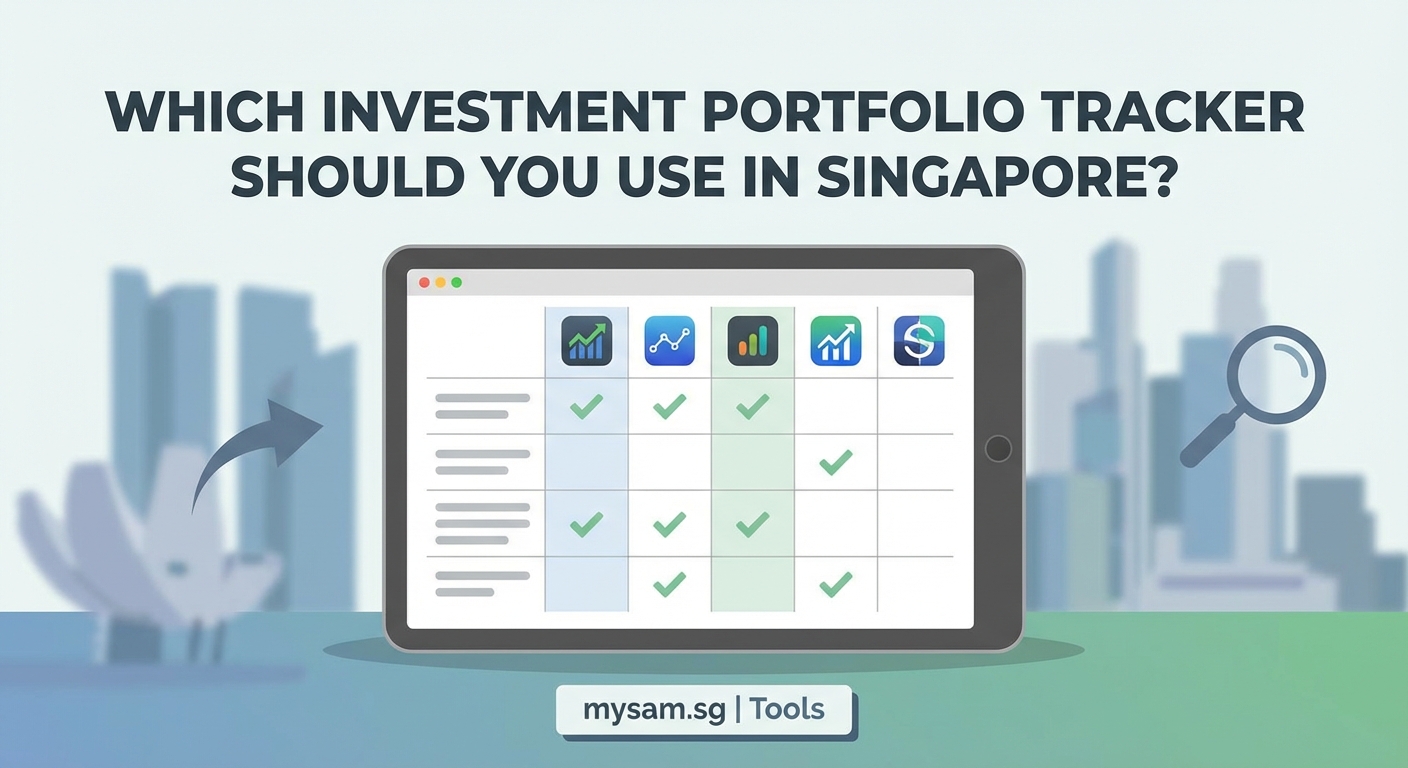
Starting with a new investment portfolio tracker feels overwhelming when you have years of transactions to enter. Break it into manageable chunks.
Begin with current holdings only. Enter what you own today with current quantities and average cost basis. Most brokers show this information clearly in their statements.
Skip historical transactions initially. Getting a current snapshot matters more than perfect historical accuracy. You can backfill transactions later if needed.
For cost basis, use your brokerage statements. They track your purchase prices for tax purposes. If you cannot find old purchase prices, use current market value as cost basis and note that early performance numbers will be approximate.
Connect accounts automatically when possible. Many trackers integrate with major brokerages through API connections or file imports. This eliminates manual entry for new transactions.
Set up asset class tags. Group holdings into categories like Singapore equities, US equities, bonds, REITs, crypto, and cash. This enables meaningful allocation analysis.
Schedule your first review. Put a calendar reminder for one month out. Check if all transactions synced correctly and if the dashboard shows what you expected.
Advanced tracking strategies
Once basic tracking runs smoothly, consider these advanced techniques.
Benchmark comparison: Add relevant indexes to your tracker. Compare your Singapore stock performance against the STI, US stocks against the S&P 500, and your total portfolio against a balanced benchmark matching your target allocation.
Sector and geography analysis: Break down holdings by sector (technology, finance, healthcare) and region (Singapore, US, Europe, Asia ex-Singapore). This reveals concentration risks that total allocation percentages miss.
Dividend yield monitoring: Track trailing and forward dividend yields for income-focused portfolios. Set alerts when yields drift outside your target range, signaling potential rebalancing needs.
Tax lot tracking: For taxable accounts, track individual purchase lots separately. This enables tax-loss harvesting and optimizes which shares to sell for tax efficiency.
Goal-based portfolios: Create separate virtual portfolios within your tracker for different goals (retirement, house down payment, children’s education). This clarifies if you are on track for each objective.
Privacy and security considerations
Portfolio trackers access sensitive financial data. Take security seriously.
Use platforms with read-only access. They should view your holdings but never execute trades. Legitimate trackers never ask for trading passwords.
Enable two-factor authentication on both your tracker account and connected brokerage accounts. This adds a critical security layer.
Review connected apps regularly. Disconnect any trackers you stopped using. Old integrations create unnecessary security exposure.
Understand data storage locations. Some platforms store data on Singapore servers, others in the US or Europe. This affects privacy regulations and data access by foreign governments.
Read privacy policies before connecting bank accounts. Some free trackers monetize by selling anonymized financial data. Decide if this tradeoff works for you.
When to upgrade or switch trackers
Your first portfolio tracker might not be your forever tracker. Portfolios evolve and needs change.
Signs you outgrew your current tool:
- You manually work around missing features weekly
- Your portfolio grew too large for the free tier
- You added asset classes the tracker does not support well
- Performance reporting does not answer your questions
- The mobile app frustrates you every time you open it
Switching trackers involves work. You must export data, set up the new platform, and verify everything transferred correctly.
Plan switches during quiet periods. Avoid switching right before tax season or during major market volatility when you need reliable data.
Export full transaction history before canceling old accounts. Keep backups of all historical data even after switching.
Making tracking work for you
The best investment portfolio tracker is the one you actually use consistently. Fancy features mean nothing if you abandon the tool after two months.
Start simple. Track basic holdings and returns first. Add complexity only when you genuinely need it.
Automate ruthlessly. Every manual step you can eliminate increases the chance you will stick with tracking long-term.
Review on a schedule, not on impulse. Decide if you are a monthly, quarterly, or annual reviewer. Match your tracking detail to your review frequency.
Use insights to improve decisions. Tracking for tracking’s sake wastes time. Let the data guide rebalancing, tax optimization, and risk management.
Your portfolio tracker should clarify your financial picture, not complicate it. If checking your tracker creates anxiety rather than confidence, simplify your approach or reduce review frequency.
The goal is not perfect tracking. The goal is good-enough visibility to make informed investment decisions without drowning in data or wasting hours on maintenance.