

Freelancers and self-employed professionals in Singapore face a reality that salaried employees don’t: no employer-sponsored insurance. You’re responsible for every aspect of your financial safety net, from medical bills to income protection. This changes everything about how you approach insurance.
Freelancers in Singapore need different insurance than employees because they lack employer-provided coverage. Essential policies include personal accident insurance, hospitalization coverage, income protection, and professional indemnity. Without these, a single illness or client dispute could devastate your finances. Building your own safety net requires understanding which policies matter most and how much coverage you actually need for your situation.
Why freelancers face different insurance needs
Employees get automatic coverage through their companies. Group health insurance, work injury compensation, and sometimes life insurance come standard.
You don’t get any of that.
When you’re self-employed, every policy becomes your responsibility. Miss a premium payment? You’re uninsured. Choose the wrong coverage? You’re underprotected.
The stakes are higher too. If you fall sick for three months, there’s no paid medical leave. No income arrives while you recover. Your clients move on to other freelancers, and rebuilding takes time.
This isn’t meant to scare you. It’s meant to help you plan properly.
Core insurance policies every freelancer should consider
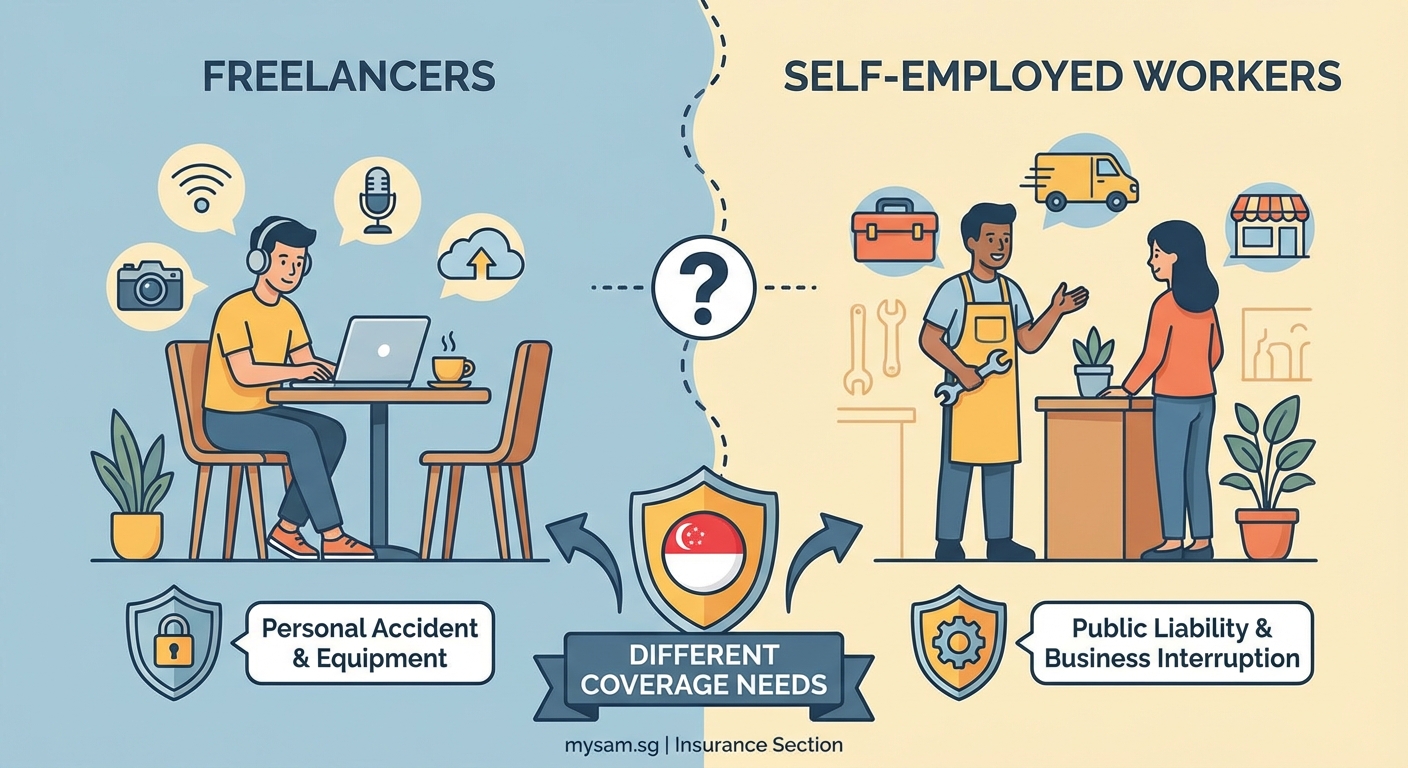
Let’s break down what actually matters for insurance for freelancers Singapore.
Hospitalization and surgical coverage
MediShield Life covers basic hospitalization, but it won’t cover everything. Private hospital bills can reach tens of thousands of dollars for serious conditions.
Integrated Shield Plans (IPs) fill this gap. They cover private hospital stays, specialist treatments, and procedures that MediShield Life doesn’t fully pay for.
As a freelancer, you can’t afford a $50,000 hospital bill eating into your business savings. An IP typically costs between $100 to $400 monthly, depending on your age and coverage level.
Choose a plan that covers private hospitals if you want more doctor choices and shorter wait times. If you’re comfortable with public hospitals, a lower-tier plan saves money while still protecting against catastrophic costs.
Personal accident insurance
This covers injuries from accidents. Falls, traffic incidents, sports injuries. Things that happen outside of work hours too.
Why does this matter more for freelancers? Because you don’t have work injury compensation like employees do. If a delivery rider gets hit by a car during a work trip, their employer’s insurance kicks in. You need your own coverage.
Personal accident insurance pays out for:
- Permanent disability
- Temporary disability
- Medical expenses from accidents
- Death benefits for your dependents
Costs range from $200 to $600 annually for reasonable coverage. Look for policies that cover at least $100,000 for permanent disability.
Income protection insurance
This is the big one that freelancers often skip.
Income protection (also called disability income insurance) replaces a portion of your earnings if you can’t work due to illness or injury. Typical policies cover 50% to 75% of your monthly income.
The waiting period matters. Some policies only pay out after 30 days of disability. Others wait 90 days. Choose based on how long your emergency fund can sustain you.
A graphic designer earning $5,000 monthly might pay $150 to $250 per month for coverage that provides $3,000 monthly if they become disabled. Expensive? Yes. But three months without income costs $15,000, which makes the premium look reasonable.
Professional indemnity insurance
If your work involves giving advice or delivering services that could cause financial loss to clients, you need this.
Consultants, designers, marketers, IT professionals, and coaches should all consider professional indemnity. It covers legal costs and compensation if a client sues you for:
- Professional negligence
- Errors in your work
- Breach of contract
- Intellectual property issues
A marketing consultant who runs a failed campaign might face a lawsuit claiming their strategy cost the client $100,000 in lost revenue. Professional indemnity covers your legal defense and potential settlement.
Coverage typically starts at $100,000 and goes up to $1 million or more. Annual premiums range from $300 to $1,500 depending on your profession and coverage amount.
Critical illness insurance
This pays a lump sum if you’re diagnosed with a covered serious illness. Cancer, heart attack, stroke, kidney failure. The major ones that require extended treatment and recovery.
The payout helps cover:
- Medical treatments not fully covered by hospitalization insurance
- Lost income during recovery
- Modifications to your home or lifestyle
- Experimental treatments
For freelancers, critical illness insurance matters because recovery often takes six months to two years. Your income stops, but your expenses continue.
A 35-year-old might pay $80 to $150 monthly for $100,000 in critical illness coverage. By age 45, that same coverage costs $150 to $250 monthly.
How to determine your coverage amounts
Guessing doesn’t work. You need a system.
- Calculate your monthly essential expenses (rent, utilities, food, insurance premiums, loan payments).
- Multiply by 12 to get your annual baseline survival cost.
- Add 20% buffer for unexpected costs.
- That’s your minimum income protection target.
For hospitalization, look at your risk tolerance. Can you afford a $10,000 surprise bill? Then basic coverage works. Want zero out-of-pocket costs? Get comprehensive private hospital coverage.
Critical illness coverage should equal at least two years of living expenses. If you need $4,000 monthly to survive, aim for $96,000 in coverage minimum.
Professional indemnity depends on your client contracts. What’s the largest project value you handle? Your coverage should match or exceed that amount.
Common mistakes freelancers make with insurance
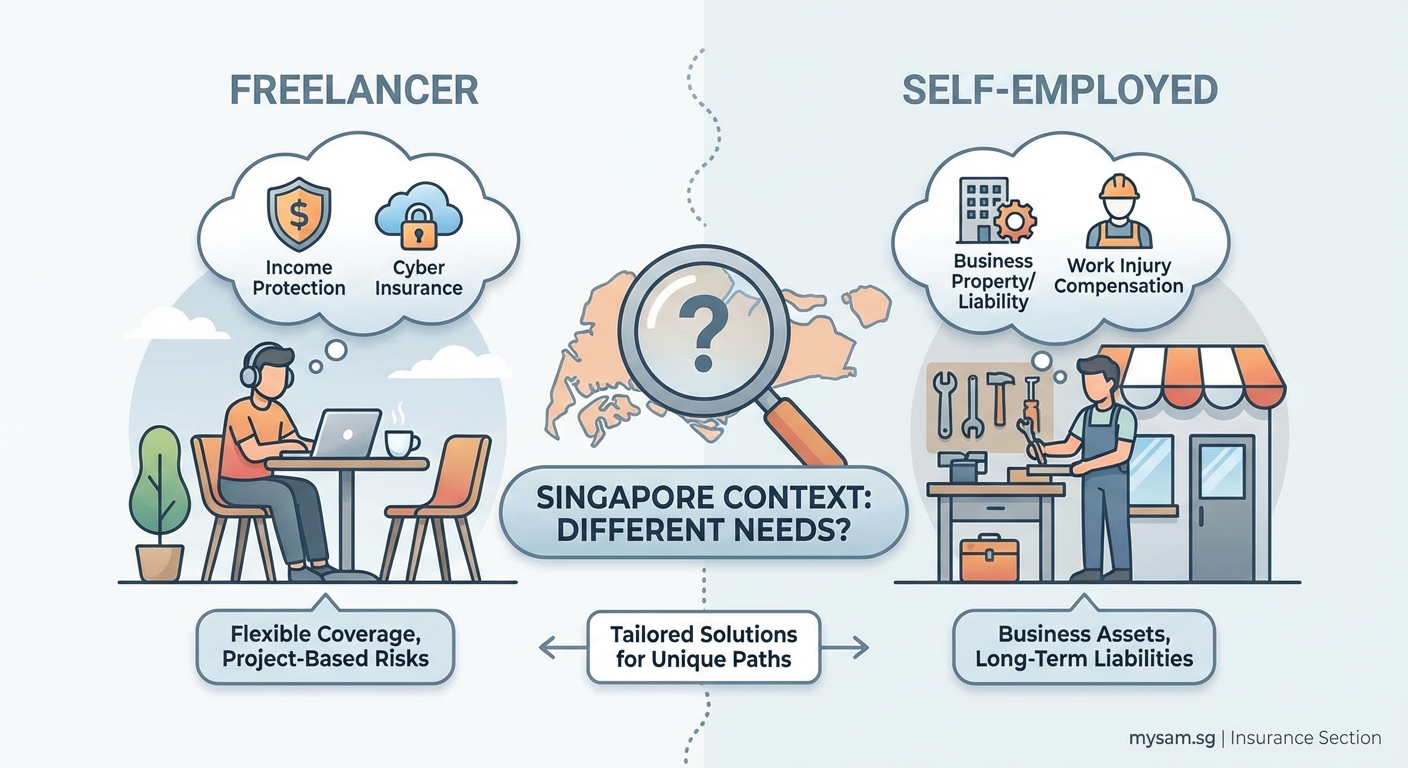
| Mistake | Why It Hurts | Better Approach |
|---|---|---|
| Skipping income protection | One illness wipes out savings | Get coverage for at least 50% of income |
| Buying only the cheapest policies | Low coverage limits leave you exposed | Balance premium costs with adequate protection |
| Not updating coverage as income grows | Your $50,000 policy doesn’t match your $100,000 income needs | Review annually and increase coverage |
| Ignoring professional indemnity | One lawsuit costs more than years of premiums | Get coverage before you need it |
| Relying only on MediShield Life | Public hospital co-payments and limits add up | Add an Integrated Shield Plan |
Comparing employee benefits to self-employed coverage
Employees get bundled protection. You need to assemble your own package.
Here’s what a typical employee receives:
- Group hospitalization insurance covering private hospitals
- 14 days of paid medical leave annually
- Work injury compensation for on-the-job accidents
- Sometimes life insurance equal to 12 months salary
- CPF contributions including MediSave
As a freelancer, you’re building this yourself:
- You buy your own Integrated Shield Plan
- You create your own income buffer through savings and insurance
- You purchase personal accident coverage
- You decide if you need life insurance based on dependents
- You make voluntary MediSave contributions
The cost feels higher because you see every premium. But employees pay too, through lower salaries. Companies factor insurance costs into total compensation.
Your advantage? You choose exactly what you need instead of accepting a standard package.
Building your insurance plan step by step
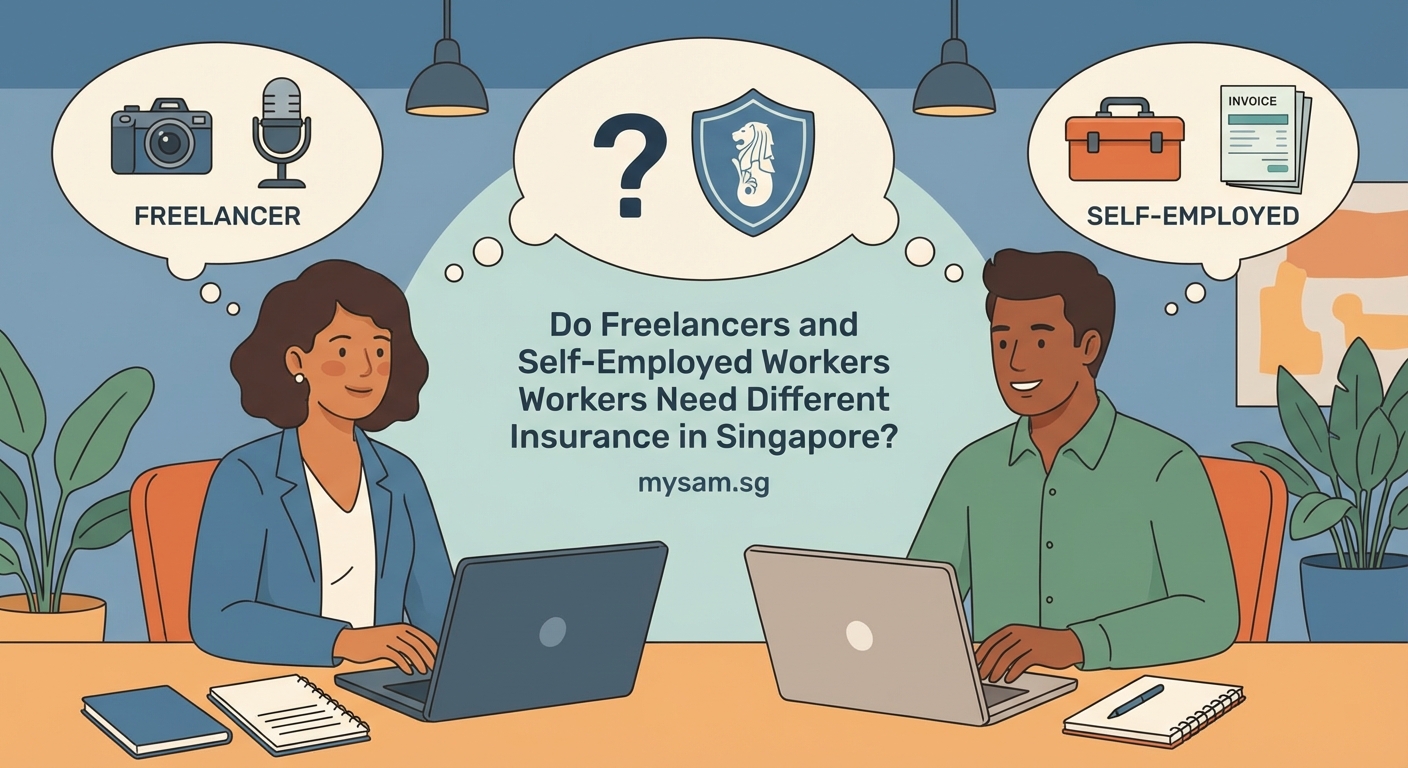
Start with the foundation, then add layers.
- Get an Integrated Shield Plan first. Medical emergencies happen without warning, and hospital bills arrive fast.
- Add personal accident insurance next. The premiums are low relative to the protection.
- Set up income protection once you have consistent earnings. You need income history to qualify anyway.
- Buy critical illness coverage before age 40 if possible. Premiums increase significantly after that.
- Add professional indemnity when you land your first major client or project over $20,000.
Don’t try to buy everything at once. Spread purchases over 6 to 12 months as your freelance income stabilizes.
“The biggest mistake I see freelancers make is waiting until they can afford ‘perfect’ coverage. Start with basic protection and upgrade as your income grows. Any coverage beats no coverage when something goes wrong.” – Financial planner specializing in self-employed professionals
Tax considerations for freelancer insurance
Some insurance premiums qualify for tax relief in Singapore.
You can claim relief on:
- Life insurance premiums (up to $5,000 CPF relief cap, shared with CPF contributions)
- MediSave contributions used for MediShield Life and Integrated Shield Plans
You cannot claim relief on:
- Personal accident insurance
- Income protection insurance
- Professional indemnity insurance
These policies still protect your income and assets. They just don’t reduce your tax bill.
Keep all premium receipts. If you operate as a sole proprietor, some professional indemnity premiums might qualify as business expenses. Check with your tax advisor.
When to review and adjust your coverage
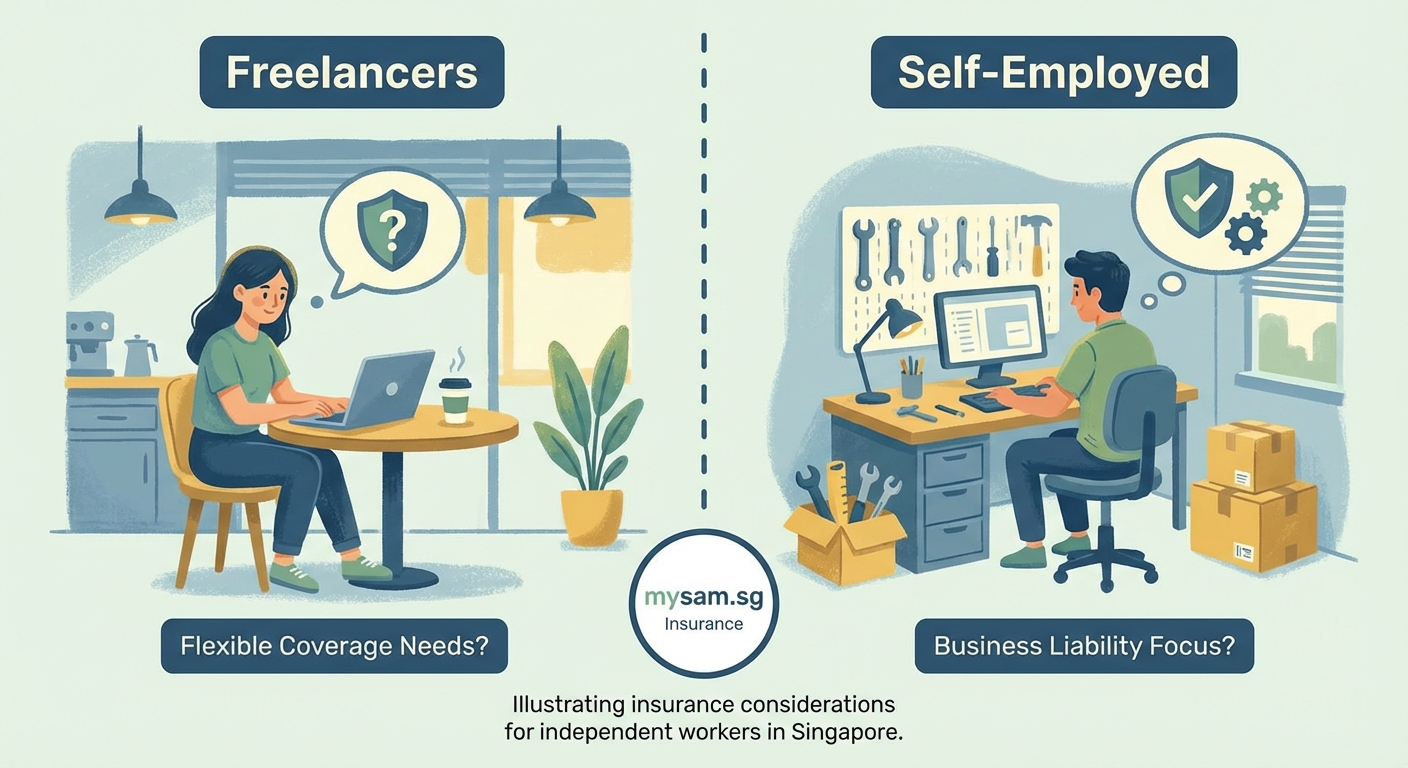
Your insurance needs change as your freelance career evolves.
Review your policies annually, and definitely when:
- Your monthly income increases by 30% or more
- You take on larger clients or projects
- You get married or have children
- You buy property or take on significant debt
- You turn 40, 50, or 60 (premium increases accelerate)
- You develop a chronic health condition
Don’t wait for renewal notices to think about coverage. Set a calendar reminder each January to review all policies.
If your income dropped significantly, you might need to reduce coverage temporarily. That’s okay. Adjust to what you can sustain, but maintain at least basic hospitalization and accident coverage.
Alternative options for budget-conscious freelancers
Tight budget? You still have options.
Start with MediShield Life plus a basic Integrated Shield Plan for public hospital coverage. This costs significantly less than private hospital plans but still protects against catastrophic medical bills.
Consider term life insurance instead of whole life if you have dependents. Term coverage costs 60% to 80% less for the same death benefit.
Join professional associations. Some offer group insurance rates for members. The Freelancers and Self-Employed Unit (FSEU) and various industry associations sometimes negotiate better premiums.
Use your CPF MediSave to pay MediShield Life and Integrated Shield Plan premiums. This doesn’t touch your cash flow.
Build a larger emergency fund if you can’t afford income protection yet. Aim for 12 months of expenses instead of the standard six months. It’s not insurance, but it buys you time.
Making insurance work with irregular income
Freelance income fluctuates. Some months bring $8,000, others bring $2,000.
Pay annual premiums instead of monthly when possible. You often get 5% to 10% discounts, and you only need to find the money once per year.
Set aside insurance money first when large payments arrive. Treat premiums like taxes. They’re not optional.
Choose policies with flexible premium payment terms. Some insurers let you pause coverage for a few months if income drops severely, though this isn’t ideal.
If cash flow becomes impossible, reduce coverage rather than cancelling completely. Drop from private to public hospital coverage. Lower your income protection percentage. But maintain some protection.
Rebuilding insurance after cancellation is harder. You’re older, possibly less healthy, and starting from scratch.
Your insurance safety net starts now
You’ve built a freelance career by taking control of your professional life. Insurance works the same way. Nobody else will protect your income, health, or business reputation.
Start with one policy this month. Get hospitalization coverage sorted. Next month, add accident protection. Build your safety net piece by piece, and adjust as your career grows. The freelancers who thrive long-term are the ones who plan for problems before they arrive.