
You’ve probably heard friends or family mention Singapore Savings Bonds as a safe place to park money. Maybe you’re wondering if they’re worth your time, or if there’s a catch behind the government guarantee. The truth is, SSBs are one of the most straightforward investment products available to Singaporeans, but they’re not a magic solution for every financial goal.
Singapore Savings Bonds are low-risk government bonds offering flexible redemption, step-up interest rates, and full capital protection. They suit emergency funds and conservative portfolios but deliver modest returns compared to equities. You can buy SSBs through DBS/POSB, OCBC, or UOB internet banking with no upfront fees, redeem anytime penalty-free, and receive your principal plus accrued interest within days.
What are Singapore Savings Bonds?
Singapore Savings Bonds are debt securities issued by the Singapore government every month. When you buy an SSB, you’re essentially lending money to the government for up to 10 years. In return, you earn interest that increases over time, following a step-up structure.
Unlike fixed deposits or corporate bonds, SSBs give you full flexibility to redeem your investment anytime without penalty. You get back your principal plus any accrued interest, making them a rare combination of safety and liquidity.
The Monetary Authority of Singapore manages the SSB program, which launched in 2015 to give everyday Singaporeans access to long-term government bond rates without locking up their money.
How SSB interest rates work
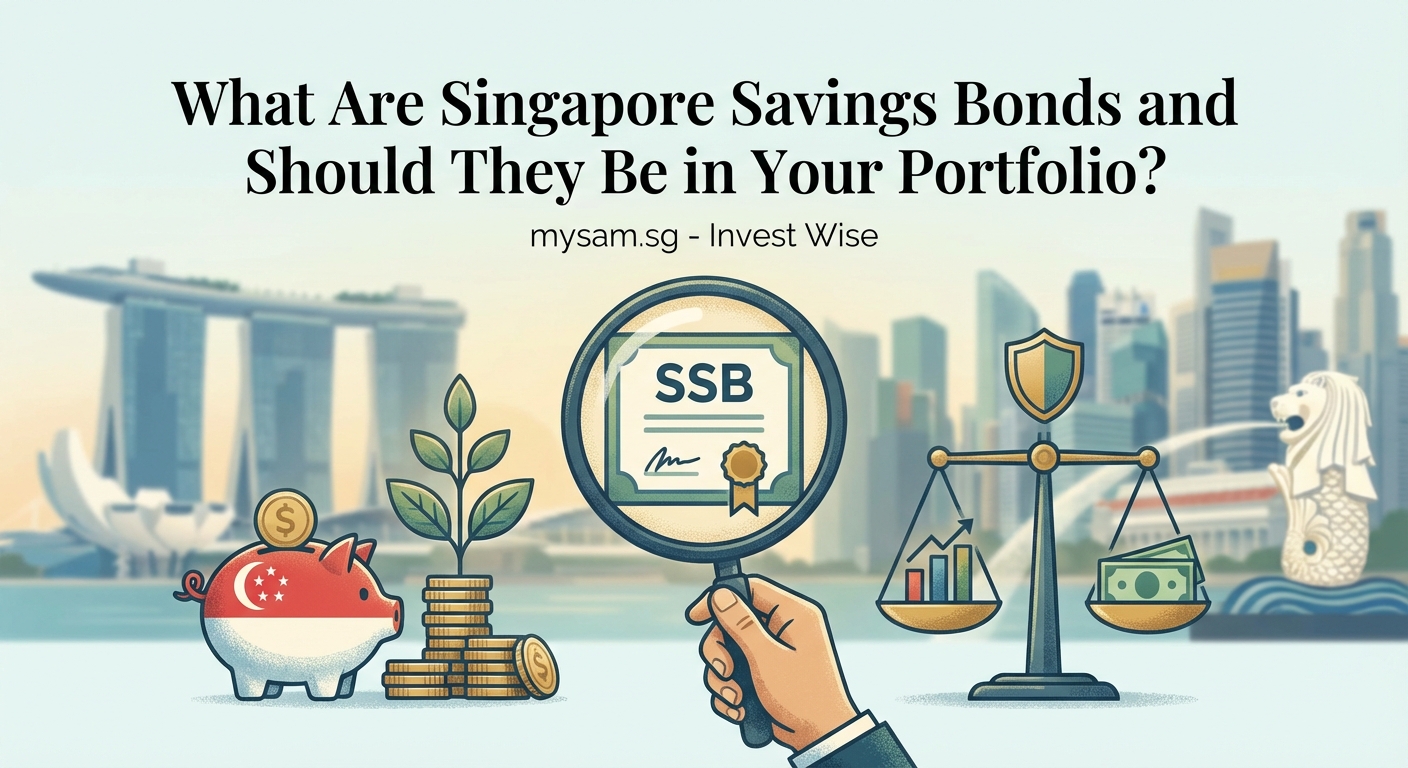
SSB interest rates follow a step-up pattern. The longer you hold the bond, the higher your average return becomes.
For example, a typical SSB might offer 2.5% in the first year, 2.8% in the second year, and gradually increase to 3.2% by the tenth year. These rates are pegged to Singapore Government Securities yields, so they move with market conditions.
The interest you earn compounds annually. If you hold an SSB for five years, you’ll receive the average of the first five years’ rates, not just the fifth-year rate. This structure rewards patience while still allowing early redemption.
Each month’s SSB issue comes with its own rate schedule, published by MAS around the first business day of the month. Rates can vary significantly depending on global interest rate trends and local monetary policy.
Key features that make SSBs different
Several features set Singapore Savings Bonds apart from other fixed-income products.
Capital protection: Your principal is 100% guaranteed by the Singapore government. There’s zero credit risk, making SSBs one of the safest investments available.
No lock-in period: You can redeem your bonds anytime after the first month. Submit a redemption request before the month’s deadline, and you’ll receive your money plus interest on the next payout date.
Low entry barrier: The minimum investment is just $500, with additional purchases in $500 increments. The maximum holding per person is $200,000 across all SSB issues.
No trading required: Unlike regular government bonds that trade on secondary markets, SSBs are bought and redeemed directly through the MAS. You never need to worry about market prices or finding a buyer.
Predictable returns: You know exactly what interest you’ll earn if you hold the bond for any given period. There are no surprises or hidden fees.
Who should consider buying SSBs?
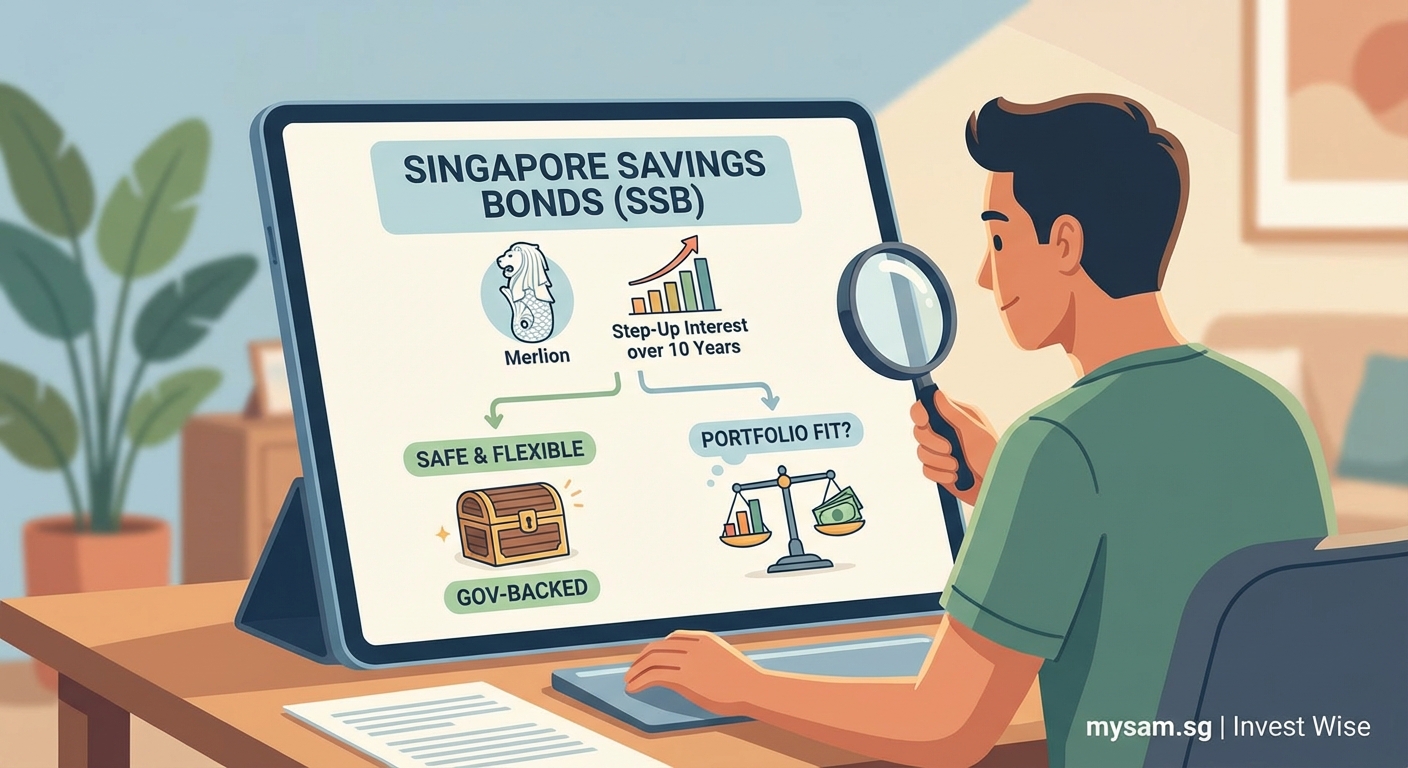
Singapore Savings Bonds work best for specific financial situations and goals.
They’re ideal for emergency funds. You need liquidity, but you want better returns than a regular savings account. SSBs let you earn government bond rates while keeping your money accessible.
Conservative investors nearing retirement often use SSBs to reduce portfolio volatility. If you can’t stomach stock market swings but want some return above inflation, SSBs provide a middle ground.
Parents saving for children’s education 5 to 10 years away find SSBs useful. The step-up structure means returns improve over time, and you can redeem if plans change.
SSBs also suit people building their first investment portfolio. You can start with $500, learn how bond investments work, and avoid the complexity of corporate bonds or bond funds.
However, SSBs are not ideal for everyone. If you’re young with a long investment horizon, equities typically offer better long-term returns. If you need monthly income, SSBs pay interest only once a year. If you’re chasing high returns, you’ll find SSBs frustratingly modest.
How to buy Singapore Savings Bonds
Buying SSBs is straightforward once you complete the initial setup.
- Open a CDP Securities account if you don’t already have one. This is the Central Depository account that holds your bonds.
- Link your bank account to your CDP account through your bank’s internet banking platform.
- Apply for SSBs during the application period, typically from the first to the fourth last business day of each month.
- Submit your application through DBS/POSB, OCBC, or UOB internet banking, specifying how much you want to invest.
- Wait for the allotment results, usually announced a few days before the issue date.
- Your money is deducted from your bank account on the issue date, and your bonds appear in your CDP account.
There are no application fees, management fees, or transaction charges. The entire process happens digitally, so you never handle physical certificates.
Redemption process and timing
Redeeming SSBs is just as simple as buying them.
Log into your bank’s internet banking platform and submit a redemption request during the redemption window, which runs from the first business day to the fourth last business day of each month.
Your redemption processes on the first business day of the following month. You’ll receive your principal plus all accrued interest within a few business days.
For example, if you submit a redemption request on March 15, your bonds are redeemed on April 1, and you receive payment by early April.
There’s no penalty for early redemption. You simply forfeit the future interest you would have earned if you held the bond longer. The interest you’ve already earned up to the redemption date is paid in full.
Comparing SSBs to other safe investments
Understanding how SSBs stack up against alternatives helps you decide where they fit in your portfolio.
| Investment Type | Liquidity | Returns | Risk | Minimum |
|---|---|---|---|---|
| SSB | High (monthly redemption) | 2.5% to 3.5% average | Zero credit risk | $500 |
| Fixed Deposit | Low (penalty for early withdrawal) | 2.0% to 3.5% | SDIC insured up to $75,000 | $500 to $1,000 |
| T-Bills | Medium (6-month or 1-year lock) | 3.0% to 4.0% | Zero credit risk | $1,000 |
| CPF SA Top-Up | None (locked till 55) | 4.0% guaranteed | Government backed | $1 |
| Money Market Fund | High (redeem anytime) | 2.5% to 3.5% | Very low but not zero | $1,000 |
SSBs offer the best combination of liquidity and safety. Fixed deposits might offer slightly higher rates during promotional periods, but you lose flexibility. Treasury bills provide better returns but lock your money for six months or a year. CPF Special Account top-ups give the highest guaranteed return but sacrifice all liquidity until retirement.
Common mistakes to avoid
Even with a simple product like SSBs, people make avoidable errors.
Mistake 1: Treating SSBs as a primary growth vehicle. SSBs are for capital preservation and modest returns, not wealth building. If you’re 30 years old and putting your entire portfolio in SSBs, you’re missing out on decades of potential equity growth.
Mistake 2: Missing application deadlines. Applications close on the fourth last business day of the month. Miss it, and you wait another month. Set calendar reminders if you plan to buy regularly.
Mistake 3: Not tracking your holdings. With a $200,000 limit across all issues, you need to monitor how much you’ve invested. Exceeding the limit means your application gets rejected.
Mistake 4: Ignoring opportunity cost. If you’re holding SSBs while carrying high-interest credit card debt, you’re losing money. Pay off expensive debt first before investing in low-return bonds.
Mistake 5: Forgetting about inflation. If SSBs yield 2.8% and inflation runs at 3.5%, your real return is negative. SSBs preserve capital but don’t always preserve purchasing power.
SSB interest rate trends and what they mean
SSB rates move with broader interest rate cycles. When the US Federal Reserve raises rates, Singapore typically follows to maintain currency stability, and SSB rates increase.
From 2015 to 2021, SSB rates hovered between 1.5% and 2.5% as global rates stayed low. In 2022 and 2023, rates jumped to 3.0% and higher as central banks fought inflation.
For investors, this means timing matters somewhat. Buying SSBs when rates are high locks in better returns for the duration you hold them. Buying when rates are low means you might earn less than future issues.
However, you can redeem anytime and reinvest in higher-yielding issues if rates rise. This flexibility reduces the timing risk compared to traditional bonds.
“Singapore Savings Bonds give you the rare ability to lock in long-term government bond rates while keeping your money accessible. It’s the closest thing to a free lunch in conservative investing.” – MAS official statement on SSB design principles
Building a balanced portfolio with SSBs
SSBs work best as one component of a diversified portfolio, not as a standalone solution.
A common approach for moderate-risk investors is the 60/40 split: 60% in growth assets like stocks and REITs, 40% in stable assets like bonds and cash. SSBs can fill part of that 40%, alongside CPF, emergency cash, and short-term fixed deposits.
For conservative investors nearing retirement, a 30/70 split might make sense: 30% in equities for some growth, 70% in bonds and cash for stability. SSBs could represent 20% to 30% of the total portfolio.
Younger investors with high risk tolerance might allocate just 10% to 20% to bonds and cash, using SSBs only for emergency funds or short-term savings goals.
The key is matching your SSB allocation to your liquidity needs, risk tolerance, and time horizon. Don’t let the safety and simplicity of SSBs seduce you into over-allocating at the expense of long-term growth.
Tax treatment and reporting
Singapore does not tax capital gains or interest income for individuals. The interest you earn from SSBs is tax-free, and you don’t need to report it on any tax forms.
This makes SSBs particularly attractive compared to foreign bonds or overseas fixed deposits, where you might face withholding taxes or need to declare income.
For Singapore tax residents, SSBs are one of the cleanest investments from a tax perspective. You receive your full interest without deductions, and there’s zero paperwork burden.
Should you buy SSBs every month?
Some investors adopt a dollar-cost averaging approach, buying SSBs every month regardless of rate fluctuations. This strategy smooths out rate volatility and builds a ladder of bonds maturing at different times.
Others wait for months when SSB rates peak, maximizing their returns by timing the market. This requires monitoring rate announcements and acting fast during application windows.
Both approaches have merit. Regular monthly purchases suit people who want to automate savings and avoid timing decisions. Selective purchases suit those willing to track rates and optimize returns.
If you’re building an emergency fund, monthly purchases make sense. You’re prioritizing consistent savings over rate optimization. If you’re deploying a lump sum, waiting for a higher-rate month might be worth the effort.
What happens if you hold SSBs for the full 10 years?
Holding an SSB for the full 10-year tenure maximizes your average return. You benefit from every step-up in the interest rate schedule.
At maturity, your bond is automatically redeemed. You receive your principal plus all accrued interest in your bank account. There’s no action required on your part.
However, few investors hold SSBs for the full decade. Life changes, better opportunities emerge, or you simply need the money. The beauty of SSBs is that you’re never penalized for adapting your plans.
If you do hold for 10 years, you’ve earned a stable, government-guaranteed return that’s competitive with long-term fixed deposits and better than most savings accounts. For a set-and-forget strategy, that’s a solid outcome.
Making SSBs work for your financial goals
Singapore Savings Bonds won’t make you rich, but they’ll keep your money safe while earning a reasonable return. They’re the financial equivalent of a reliable sedan: not flashy, but dependable and practical.
If you’re building an emergency fund, saving for a home down payment in a few years, or just want a break from stock market volatility, SSBs deserve a spot in your portfolio. Set up your CDP account, mark your calendar for the monthly application window, and start building that stable foundation.
The best time to buy your first SSB was when the program launched in 2015. The second-best time is this month.