
You earn a decent salary. You know you should save more. Yet somehow, every month ends the same way: barely anything left over.
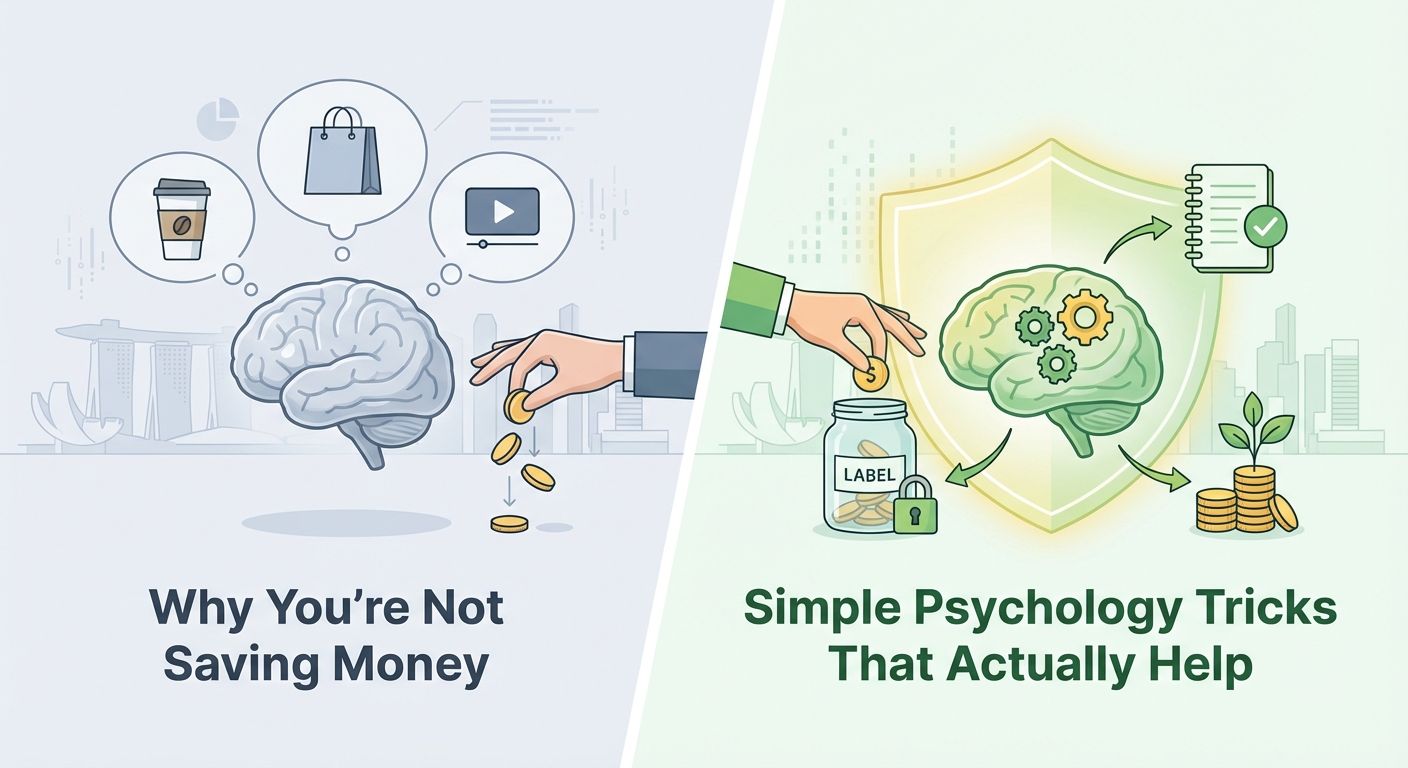
The problem isn’t your willpower. It’s that you’re fighting against how your brain is wired. Your mind prefers instant gratification over future rewards. It treats money as abstract until you actually spend it. And it’s terrible at resisting temptation when everything around you screams “buy now.”
But here’s the good news: you can use psychology to work with your brain instead of against it.
Saving money isn’t about willpower alone. By applying psychology tricks like mental accounting, commitment devices, and environmental design, you can rewire your spending habits without feeling deprived. Small behavioral changes create automatic saving patterns that compound over time, helping you build wealth while maintaining your lifestyle.
Why your brain sabotages your savings
Your brain evolved to survive, not to save for retirement.
When you see something you want, your brain releases dopamine. That feel-good chemical makes you crave the purchase. The future version of you who needs that money? Your brain barely recognizes that person as real.
This is called present bias. Studies show people value immediate rewards roughly twice as much as future ones, even when the future reward is objectively better.
Add to that decision fatigue. Every choice you make throughout the day depletes your mental energy. By evening, when you’re scrolling through online shops or passing by a cafe, your resistance is at its lowest.
Your environment doesn’t help either. Retailers design everything to trigger impulse purchases. One-click buying. Limited time offers. Free shipping thresholds. Each one exploits a psychological vulnerability.
But once you understand these patterns, you can design better systems.
Make saving invisible through automation
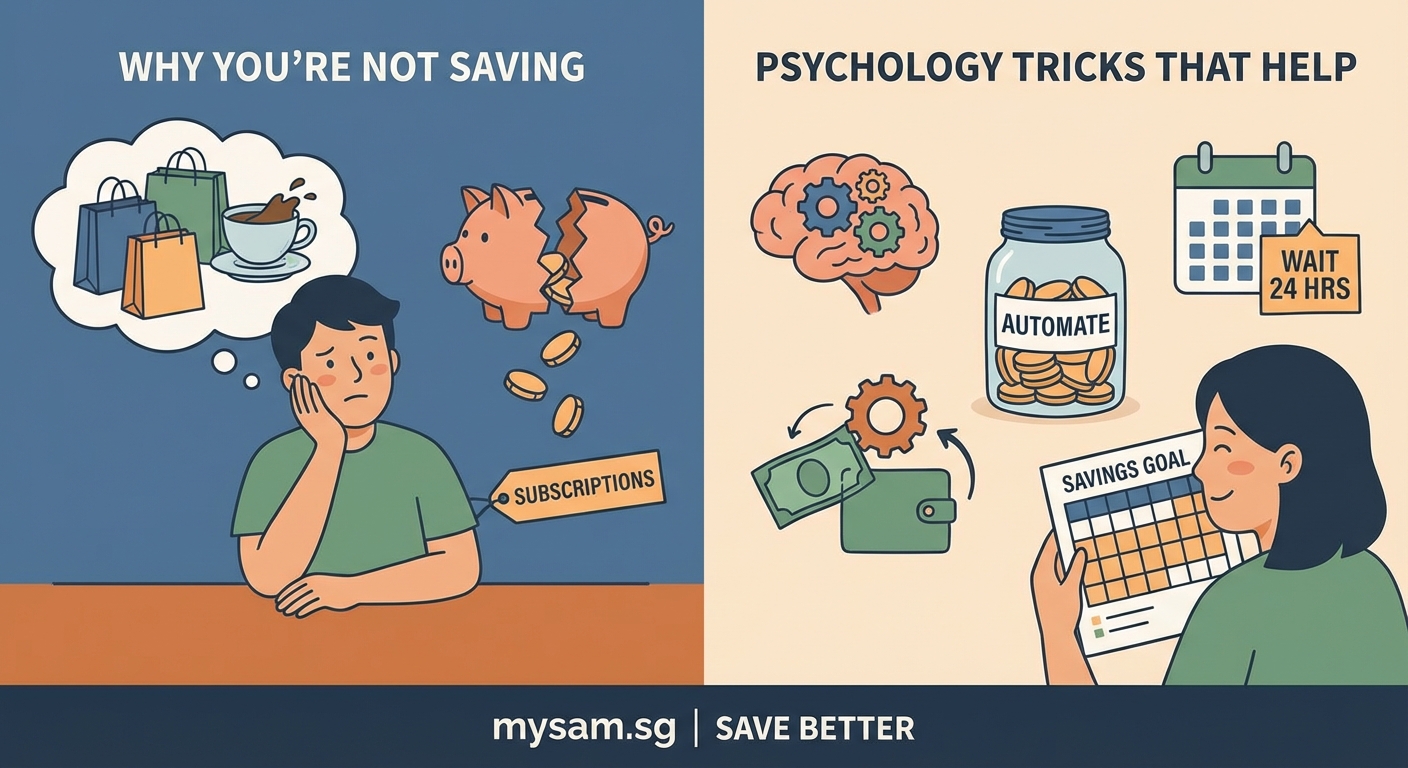
The single most effective psychology trick is removing the decision entirely.
When saving requires active effort, you’ll find excuses. When it happens automatically, you adapt without thinking about it.
Set up these three automations:
- Direct a percentage of your salary into a separate savings account the day it hits your bank. Start with 10% if you can, or even 5% if that feels more comfortable.
- Round up every purchase to the nearest dollar and transfer the difference to savings. Many banking apps offer this feature built in.
- Increase your automatic savings by 1% every three months. The change is small enough that you won’t notice, but over a year, you’ve boosted your savings rate by 4%.
The psychology here is powerful. Money you never see in your spending account doesn’t feel like a loss. Your brain adjusts your lifestyle to the amount that remains visible.
Research from behavioral economists shows automated savings programs increase savings rates by 30 to 40% compared to manual saving.
Use mental accounting to ring-fence your money
Your brain doesn’t treat all money equally, even though logically a dollar is a dollar.
You might spend $50 on dinner without thinking twice, but agonize over a $50 book. You’ll use a $20 bill found in an old jacket for something frivolous, but not money from your salary.
This quirk is called mental accounting. You can use it strategically.
Create specific savings buckets with clear labels:
- Emergency fund (for unexpected expenses)
- Vacation fund (for your next trip)
- Home deposit (for property purchase)
- Upgrade fund (for replacing old items)
When each bucket has a purpose, your brain treats withdrawing from it differently. Taking money from your “emergency fund” for a spontaneous purchase feels wrong in a way that taking from a general savings account doesn’t.
Physical separation helps even more. Use different bank accounts or even different banks for each goal. The friction of transferring money between accounts creates a pause that lets rational thinking catch up with impulse.
Shrink the time horizon to make future you feel real
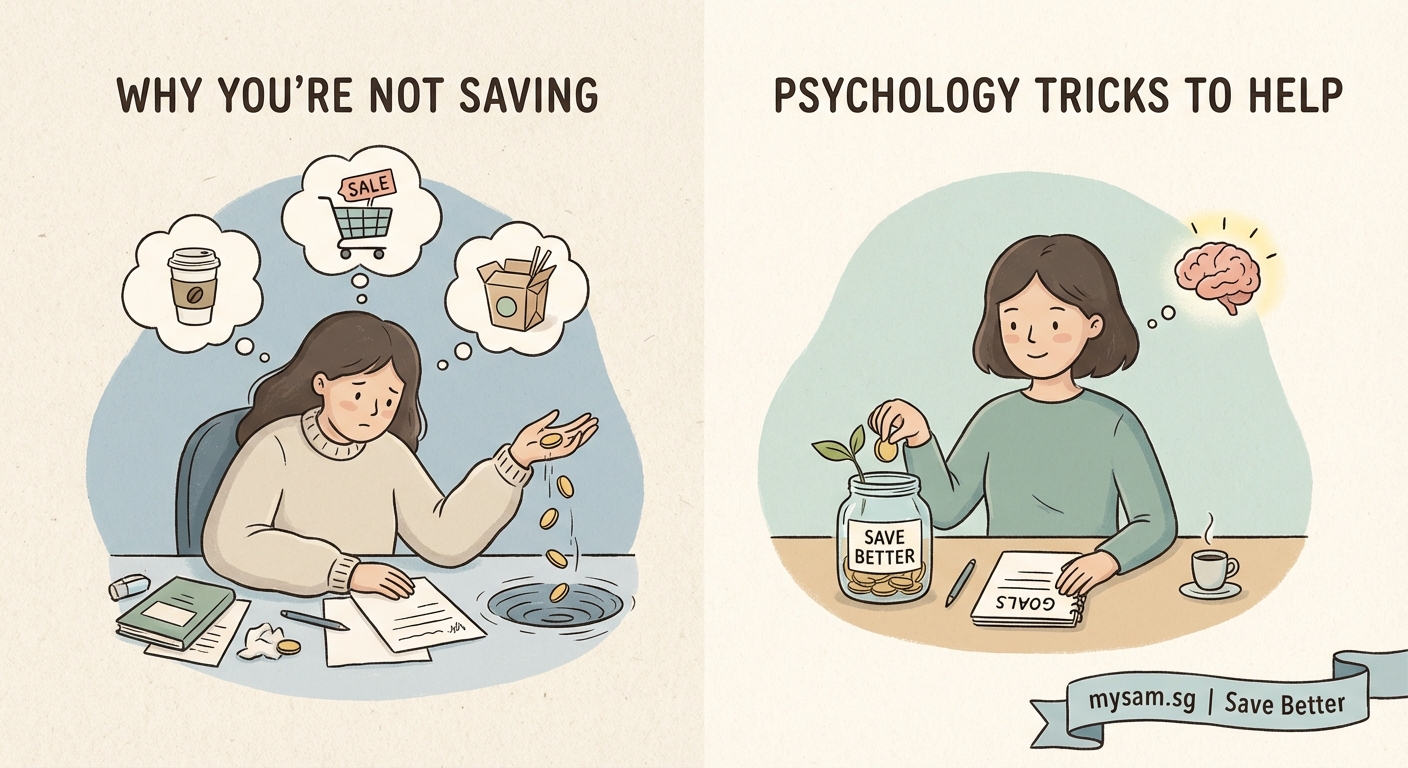
Saving for retirement in 30 years feels abstract. Saving for a specific goal six months away feels concrete.
Break down long-term goals into shorter milestones:
| Long-term goal | Short-term milestone | Psychological benefit |
|---|---|---|
| Save $50,000 for home deposit | Save $2,000 this quarter | Progress feels achievable |
| Build 6-month emergency fund | Complete 1-month fund by June | Success comes faster |
| Retire with $1 million | Reach $10,000 by year-end | Wins create momentum |
Each milestone you hit releases dopamine, the same chemical that makes spending feel good. You’re essentially gamifying your savings.
Visualize your progress. Use a chart, a thermometer graphic, or even a simple checklist. Seeing progress triggers the same satisfaction as completing a video game level.
One study found people who tracked savings progress visually saved 27% more than those who didn’t.
Deploy commitment devices to lock in good behavior
A commitment device is any choice you make now that restricts your options later.
Your future self is unreliable. Your present self needs to tie your future self to the mast.
Try these:
Fixed deposit accounts: Lock money away for a set period. The penalty for early withdrawal makes you think twice.
Savings challenges with friends: Commit publicly to saving a certain amount. Social pressure keeps you honest.
Scheduled treats: Plan one indulgence per month in advance. When random temptations appear, you can remind yourself you already have something to look forward to.
The 24-hour rule: For any non-essential purchase over $100, wait 24 hours before buying. Add it to a wishlist instead. Most items will lose their appeal.
“The best time to make a decision about your future behavior is when you’re thinking clearly, not when you’re tempted. Commitment devices let your rational self protect you from your impulsive self.”
The key is making your commitment strong enough to matter, but not so rigid that you’ll abandon it completely when life happens.
Redesign your environment to reduce temptation
Willpower is overrated. Environment design is underrated.
Small changes to your surroundings can dramatically reduce the mental effort needed to save:
- Delete shopping apps from your phone. The extra steps to reinstall create friction that stops impulse buys.
- Unsubscribe from promotional emails. You can’t be tempted by sales you don’t know about.
- Leave credit cards at home when going out casually. Carry only cash for planned expenses.
- Change your commute route if it passes tempting shops. Out of sight, out of mind.
- Keep your savings account at a different bank with no ATM card. Accessing it requires deliberate effort.
Each barrier you create is a chance for your rational brain to catch up with your emotional impulses.
Studies on choice architecture show that simply increasing the number of steps required to make a bad decision can reduce that behavior by up to 50%.
Reframe spending to feel the pain
Your brain processes spending differently depending on how you pay.
Cash feels real. You physically hand it over and watch it disappear. Credit cards feel abstract. It’s just a tap or a swipe.
This is why people spend 12 to 18% more when using cards instead of cash, according to consumer behavior research.
Reframe your spending to make it feel more concrete:
Calculate in hours worked: That $200 pair of shoes? If you earn $25 per hour after tax, that’s 8 hours of your life. Is it worth a full workday?
Use the 1% rule: Before any discretionary purchase, ask if you’d still buy it if it cost 1% more. If a small increase changes your mind, you didn’t really want it.
Track every expense for one month: Don’t try to change anything, just record it. Awareness alone often reduces spending by 10 to 15% because you become conscious of patterns.
Visualize what you’re giving up: Every dollar spent is a dollar not saved. Picture your savings goal when tempted to spend.
The goal isn’t to make yourself miserable. It’s to make spending a conscious choice rather than an automatic response.
Leverage social proof and accountability
Humans are social creatures. We care deeply about how our behavior compares to others.
Use this:
- Join a savings challenge group or online community. Seeing others succeed motivates you.
- Share your savings goals with a trusted friend or family member. Regular check-ins create accountability.
- Find a savings buddy with similar goals. Share progress weekly.
But be careful with social comparison. Follow people who inspire you, not those who make you feel inadequate or trigger lifestyle inflation.
One behavioral study found people who shared their financial goals with a supportive peer were 65% more likely to achieve them compared to those who kept goals private.
Create artificial scarcity to boost saving urgency
Scarcity drives action. When something feels limited, you prioritize it.
Create artificial scarcity around your ability to spend:
The envelope method: Allocate cash for different spending categories in physical envelopes. When an envelope is empty, that’s it for the month.
Spending caps: Set a strict weekly spending limit for discretionary purchases. Treat it like a game where the goal is to come in under budget.
No-spend challenges: Choose one day per week where you spend absolutely nothing. Then try a whole weekend. Then a week.
Each success reinforces the behavior and proves to your brain that you can live with less than you thought.
Reward yourself strategically
Deprivation doesn’t work long-term. Your brain will rebel.
Instead, build in strategic rewards that don’t derail your progress:
- For every $1,000 saved, allow yourself a $50 treat.
- Celebrate milestones with free or low-cost activities: a hike, a movie night at home, a special home-cooked meal.
- Keep a “victory log” of savings wins. Reading past successes motivates future ones.
The rewards serve two purposes. They provide positive reinforcement, making your brain associate saving with pleasure. And they prevent the feeling of deprivation that leads to binge spending.
Turn saving into your default, not your exception
The ultimate goal is making saving feel normal, not like a sacrifice.
This happens through consistency. When you save automatically every month for six months, it stops feeling like a choice. It’s just what you do.
Your lifestyle adjusts. Your brain recalibrates what “normal” spending looks like. What once felt tight becomes comfortable.
Here’s the implementation sequence:
- Start with one automatic savings transfer, even if it’s small.
- Add one environmental change that reduces temptation.
- Implement one tracking method to increase awareness.
- Layer in one commitment device to lock in progress.
- Review and adjust every three months as new habits form.
Don’t try to overhaul everything at once. Sustainable change happens through small, consistent actions that compound over time.
Your brain can work for you, not against you
Saving money isn’t about becoming a different person. It’s about working with your psychology instead of fighting it.
Your brain craves immediate rewards, so make saving feel immediate through visible progress. It responds to environment, so design surroundings that make good choices easy. It needs reinforcement, so celebrate wins along the way.
The psychology tricks that work best are the ones you’ll actually use. Pick two or three from this list that resonate with you. Implement them this week. Give them a month to become routine.
Your future self will thank you. And unlike most advice, that future self will actually feel real because you’ll have built a system that makes saving automatic, not agonizing.